How to Know When Your Soil Needs Water
Almost any overwatered plant looks unhealthy but not necessarily thirsty. They may appear to be exhausted, yellow, and sometimes drooping…
 By Plant Calculator Editorial Team
7 min read
By Plant Calculator Editorial Team
7 min read
On this page
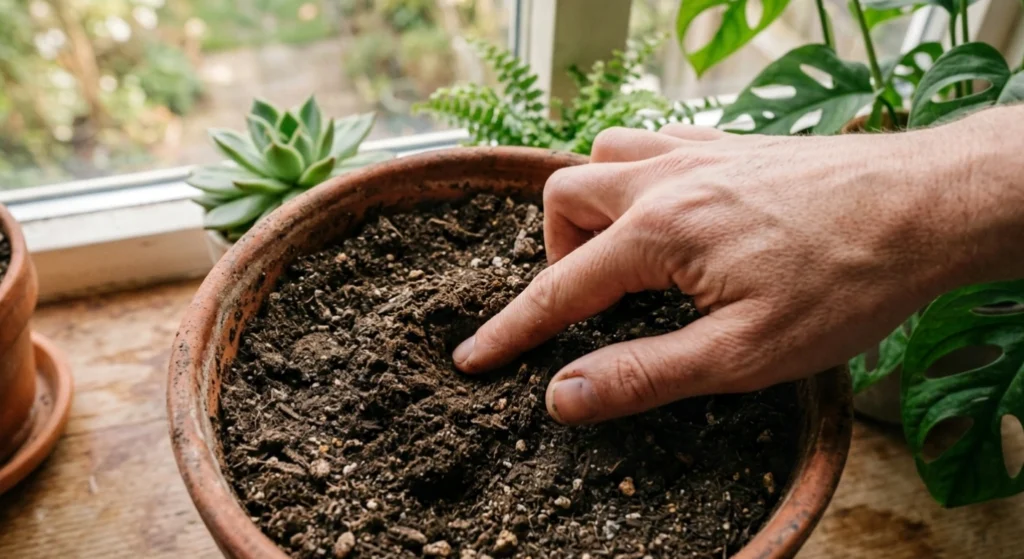
Almost any overwatered plant looks unhealthy but not necessarily thirsty. They may appear to be exhausted, yellow, and sometimes drooping in such a way that triggers one’s desire to water them once more. This is why learning how to identify whether your soil needs water or not is a better approach.
Why “Water Every Few Days” Doesn’t Actually Work
Setting watering schedules is quite convenient since you don’t need to think about anything except watering according to a fixed scheme. However, the thing is that soil dries out differently depending on such factors as pot type, size, humidity, sun exposure, etc. A plant in the terracotta pot placed in the sunny spot may require watering every other day, whereas in the plastic pot in a shadowy room it may need it weekly.
I used to kill my pothos twice due to following the same watering routine in terms of frequency and timing. One was situated in the north-facing room and was constantly soaking wet whereas another dried out too fast and started shedding leaves a few days before its “scheduled” day of watering. None of them was interested in my calendar.
The Finger Test (Still the Best First Move)
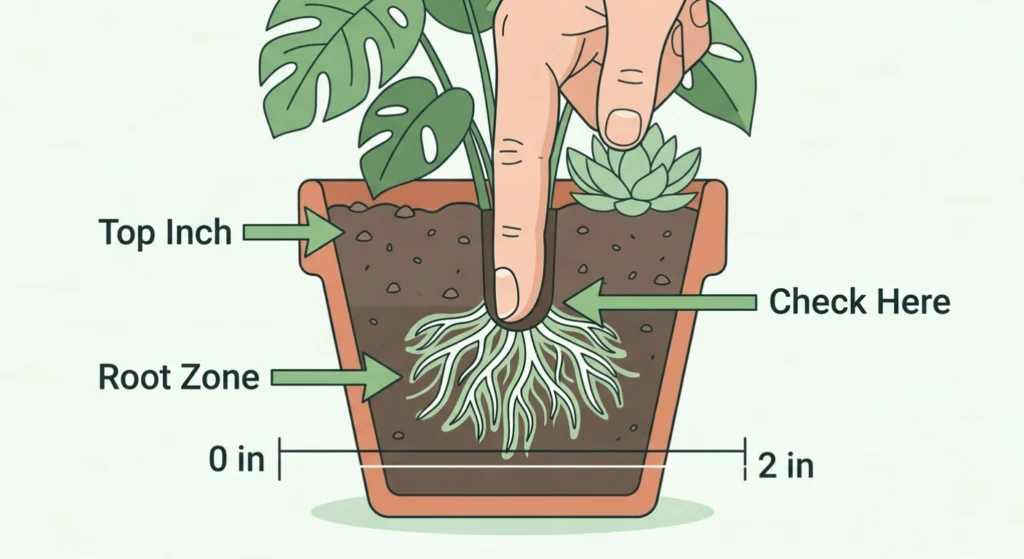
Simply put your finger into the soil – 2 inches is an average depth for most of the houseplants, though it should be 3-4 inches for those with bigger pots. If the soil is dry then it’s time to water your plants.
Here are a few remarks regarding conducting a proper test:
- Conduct a test in the middle of the pot, not its sides because the sides of the pot usually dry out quicker than the middle area.
- Conduct a test closer to 3-4 inches depth in case of bigger pots since the top inch may look absolutely dry whereas there may be still enough moisture.
- Conduct this test prior to watering because it’s better to be sure.
The low-tech method is rather appealing because it doesn’t require any batteries, special apps, etc. You just need your fingers.
Weight Is a Sneaky Good Indicator
Pick up the pot immediately after thorough watering and then pick up the same pot a few days later. The difference in the weight will show you practically everything because if it’s still heavy then there is still enough water in it. Otherwise, it means that the plant needs watering.
This technique is very effective when you get acquainted with the specific plant well enough to recognize when it needs water just by lifting the pot without additional effort.
Inspecting the Soil Itself, Not Just the Surface
Dry soil shrinks from the pot wall. Should you spot any crack between the soil and the edges of the pot, then this is an indication that soil has become excessively dry. Color changes are another way of knowing this; soil becomes light colored when it is dry and slightly dusty and dark and clumpy when it is moist.
If you see cracks developing, then the soil has definitely become very dry. In this case, it will be important to water the soil slowly and in stages so that it can absorb the water without letting it flow directly through cracks into the drainage holes.
Inspecting the Plant Itself
The leaves of the plants experiencing lack of water look crisp, dry, or even papery. Another clue is the pulling away of soil from the pot sides. Moreover, the growing process gets slower and the leaves at the bottom of the plant become brown and crispy.
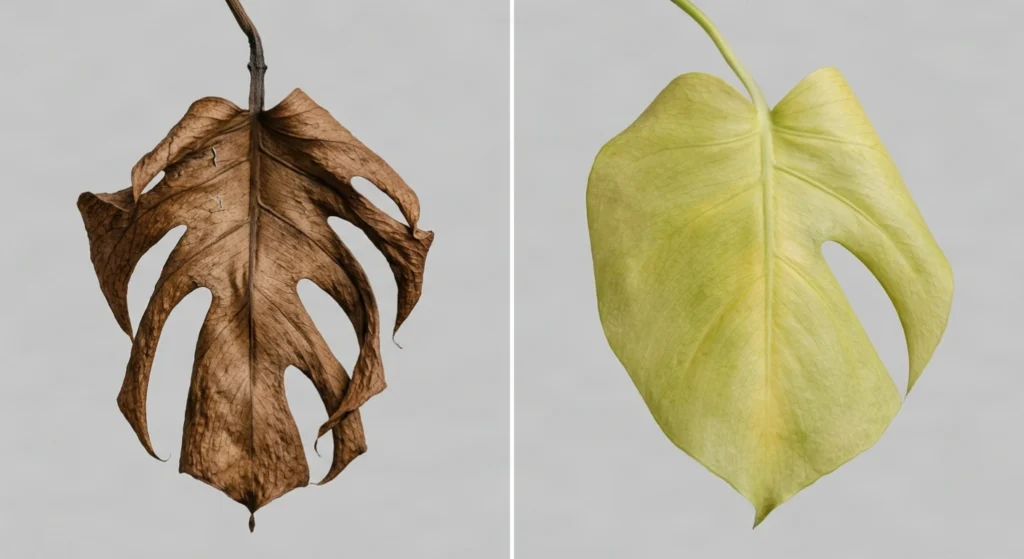
However, the signs of overwatered plants are similar to the signs of underwatered ones. Yellowing of leaves, brown spots, and other signs appear in both cases. The main difference is the leaf texture: in case of lack of water, they are crispy whereas in case of overwatered soil, they are soft. Moreover, the signs of overwatered plants appear first on the lowest leaves and spread upwards whereas the signs of underwatered ones appear on the highest leaves first.
Moreover, there is a certain odor from overwatered plants.
The texture test is the fastest way to distinguish between these situations. The crispy and dry leaves point to the lack of water. The soft leaves, brown and yellowing ones accompanied by a musty smell point to excessive water.
Moisture Meters, If You Want the Backup
You don’t need the cheap moisture meter, of course, but it helps those who aren’t confident in their ability to conduct a proper finger test or those who have big plants. Push the probe into the soil near the roots rather than on the surface because most meters measure moisture levels and they usually show the values from dry to wet. You should water your plant when the value of the meter drops into the lower third part of this range.
To be honest, I don’t use my moisture meter nowadays because I conduct finger test quite frequently and I start understanding what to expect from each particular plant. However, this device can be helpful while learning how to check the soil.
Factors that Influence on How Fast the Soil Dries Out
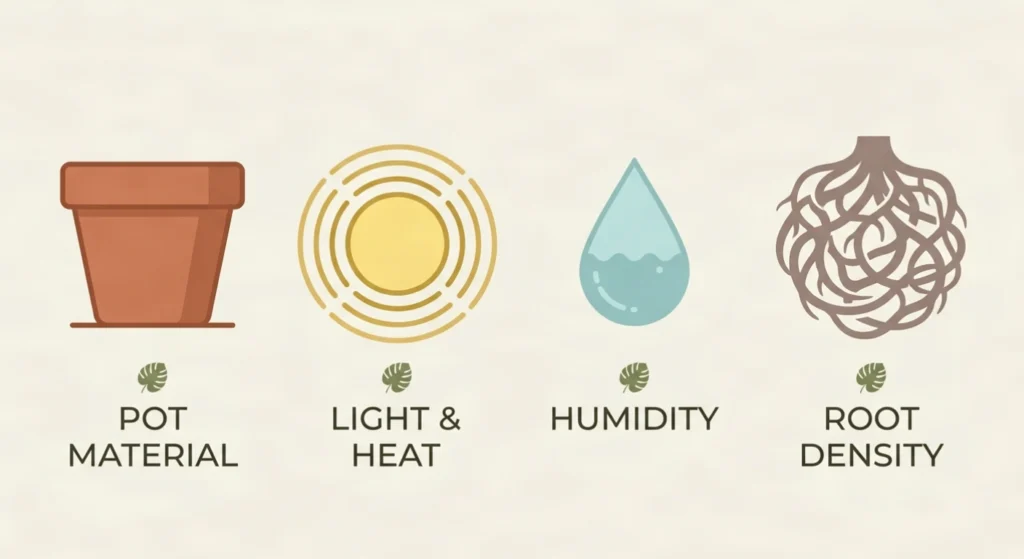
There are several factors that influence on how fast the soil dries and it’s better to know them in order to understand the reasons of sudden changes in the requirements of your plant.
Pot Material
The porous pots made of terracotta and unglazed clay allow moisture evaporation through their sides as well as the top whereas the plastic or glazed ceramic ones retain moisture longer because water evaporates through the drainage hole and soil surface only.
Light and Temperature
More light and high temperature lead to quick evaporation of water. Thus, the plant that needs watering every 10 days in winter requires watering every 4-5 days with the arrival of summer sun.
Humidity
Dry indoor air, especially with heating systems running in colder months, pulls moisture out of soil faster than a humid room would. If your heater kicks on in October, expect your watering frequency to shift along with it.
Root Density
The plant that has become root-bound in its pot needs watering more frequently since its roots occupy almost the whole soil volume and, thus, there is less water in it. It dries out faster although the pot hasn’t changed its size.
A Quick Routine That Actually Works
Instead of following some fixed schedules, you may conduct the following routine. Walk through your plants once a week and conduct the finger test of each of them. Remember which ones need watering and which don’t need it. After a few weeks, you will notice some patterns of each plant: one may require watering every 5 days whereas another one requires it every 12 days. Thus, knowing the patterns will make the testing process faster.
However, seasons change these patterns and, thus, you should conduct tests every few months, particularly around the time when your heating/air conditioning starts working.
When You’re Still Not Sure
In such cases where the finger test indicates a dry soil yet you have already watered the plant recently and the plant is not in good condition, there is a need to understand that the problem may not be due to insufficient water. This could be due to root rot which results when the plant was previously overwatered and the roots have been destroyed making it difficult for the roots to take up water irrespective of its availability. In this situation, you may have to check the state of the roots directly.
The type of soil that never dries out no matter the duration you wait should also be inspected. The problem may result from poor drainage, use of a pot that does not have sufficient holes, or the soil mixture which is very dense and holds water for more duration than the plant needs.
Identifying whether your soil is dry or wet is an activity that requires some effort in the beginning. Once you learn how to identify the state