How to Water Plants During Hot Weather
The moment temperatures climb past 85°F, the rules of watering change. What worked fine in spring, a quick pass with…
 By Plant Calculator Editorial Team
11 min read
By Plant Calculator Editorial Team
11 min read
On this page
The moment temperatures climb past 85°F, the rules of watering change. What worked fine in spring, a quick pass with the hose every couple of days, stops being enough. Soil dries faster, roots work harder, and plants that looked perfectly healthy last week can wilt by two in the afternoon. If you have noticed your garden struggling despite your best efforts, the problem usually isn’t that you’re not watering enough. It’s that you’re watering at the wrong time, in the wrong way, or without paying attention to what the plant is actually telling you.
This guide walks through what actually works when the heat sets in, based on how plants respond to stress and how water moves through soil, not generic advice recycled from every other gardening site.
Why Hot Weather Changes the Watering Game
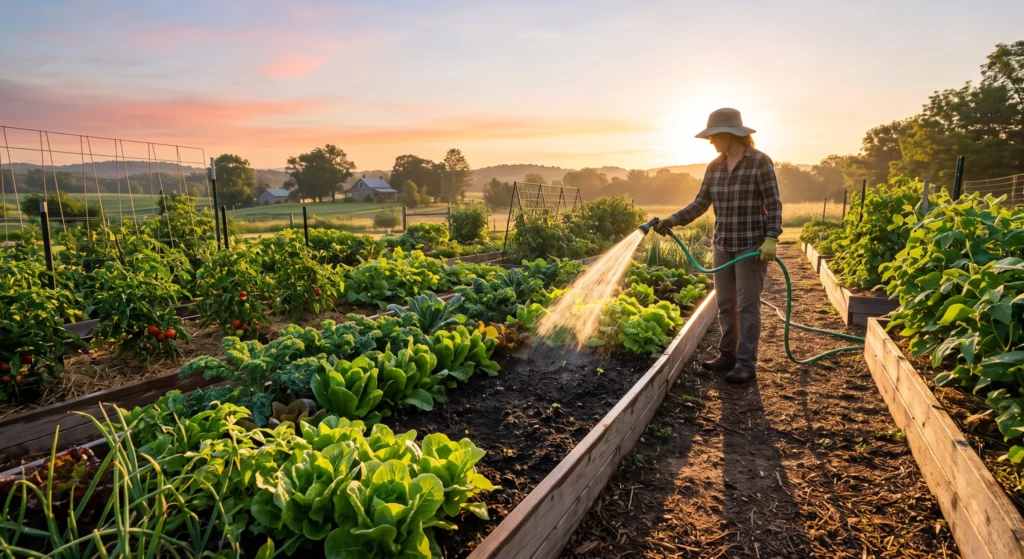
Plants lose water through their leaves in a process called transpiration, and that process speeds up dramatically as temperatures rise. On a mild 70°F day, a tomato plant might lose a modest amount of water through its leaves. On a 95°F day with low humidity, that same plant can lose several times more, simply trying to stay cool and keep its cells from collapsing.
At the same time, the soil itself is losing moisture faster than usual. Sun and wind pull water out of the top few inches through evaporation, especially in bare soil or shallow containers. So you’ve got two things pulling water out of the ground at once. One is the plant pulling it up through its roots and the other is sun pulling it straight out of the surface.
This is why the same watering schedule that kept your garden happy in April can leave it gasping in July. The math has changed, even if your routine hasn’t.
The Best Time to Water (And Why Midday Watering Backfires)
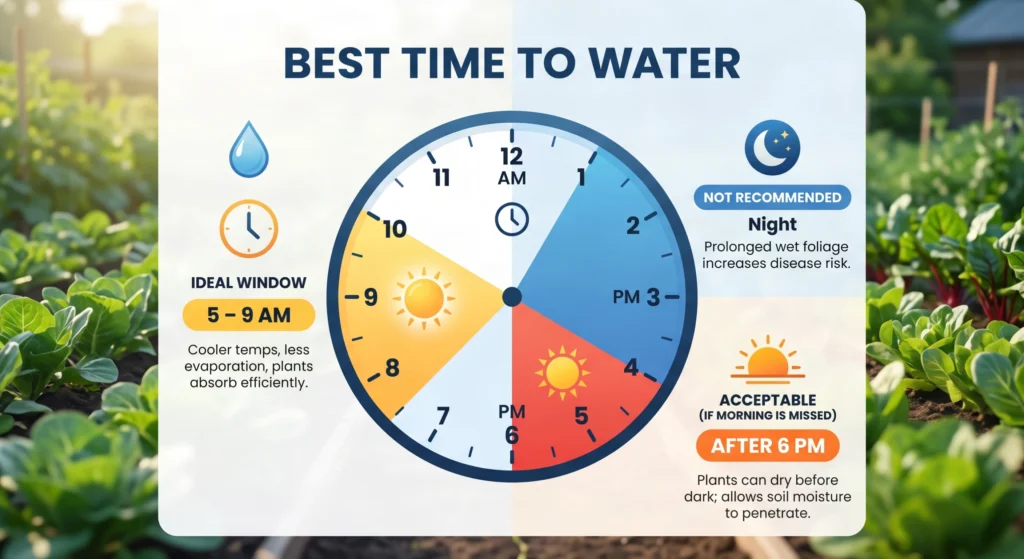
Early morning, somewhere between 5 and 9 AM, is the best window for watering almost any plant during hot weather. Here’s the reasoning behind it.
When you water in the early morning, the soil has time to absorb the moisture properly before the sun gets strong enough to evaporate it. The plant also gets hydrated before the heat of the day hits, so it’s better equipped and prepared to handle stress later on. Any water that lands on the leaves has time to dry off before nightfall, which matters because wet leaves sitting overnight create ideal conditions for fungal diseases.
Evening watering, roughly after 6 PM, is the second-best option and sometimes the only realistic one if mornings don’t work with your schedule. The main risk with evening watering is leaving foliage wet through the night, so if you go this route, try to water at the base of the plant rather than overhead on the leaves.
What you want to avoid is watering between 11 AM and 4 PM. During these hours, a huge percentage of the water you apply evaporates before it ever reaches the root zone. You end up using more water for less benefit, and there’s a persistent myth that water droplets on leaves act like tiny magnifying glasses and scorch the plant in direct sun. That specific mechanism isn’t well supported, but the practical issue still stands: midday watering is inefficient, and the heat stress on the plant continues regardless of how much water you throw at it during the hottest hours of the day.
An old gardening saying puts it simply: water the roots, not the leaves, and water when the sun isn’t watching.
How to Tell If Your Plants Are Actually Thirsty
Not every droopy plant needs water immediately. Some plants, like squash and cucumbers, naturally wilt a little in the afternoon heat and bounce back completely by evening. That’s a normal defense mechanism, not a cry for help. Watering reflexively every time you see a droop can lead to overwatering, which brings its own set of problems, including root rot and fungal issues.
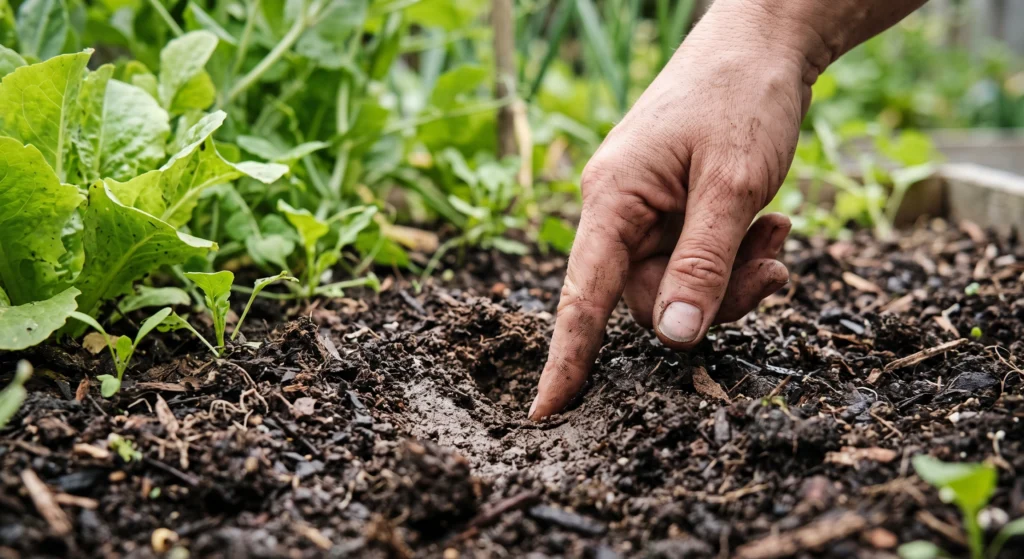
Here’s how to check before you reach for the hose:
- Do the finger test. Push your finger about two inches into the soil near the plant’s base. If it’s dry at that depth, it’s time to water. If it’s still damp, hold off.
- Check the time of day. If a plant looks wilted in the late afternoon but was fine that morning, wait until evening to see if it recovers on its own before assuming it needs water.
- Look at leaf color, not just posture. Leaves that are turning yellow, curling inward, or developing crispy brown edges are showing signs of actual water stress, not just afternoon slump.
- Lift container plants. A pot that feels unusually light is a strong sign the soil has dried out. This trick works especially well once you get used to how a properly watered pot feels.
- Watch new growth first. Young leaves and new shoots show stress before older, established foliage does, so they’re a useful early warning sign.
Getting this right takes a bit of observation over the first week or two of hot weather, but once you know how your specific plants behave, you’ll stop guessing.
Deep, Infrequent Watering Beats Frequent Light Sprinkling
This is probably the single most important shift to make during summer. A lot of people respond to heat by watering a little bit every single day, thinking that constant moisture will help. In most cases, it does the opposite.
Light, frequent watering wets only the top inch or two of soil. Roots naturally grow toward where the water is, so shallow watering trains roots to stay near the surface, where they are more exposed to heat and dry out faster. It creates a cycle where the plant becomes increasingly dependent on daily watering just to survive.
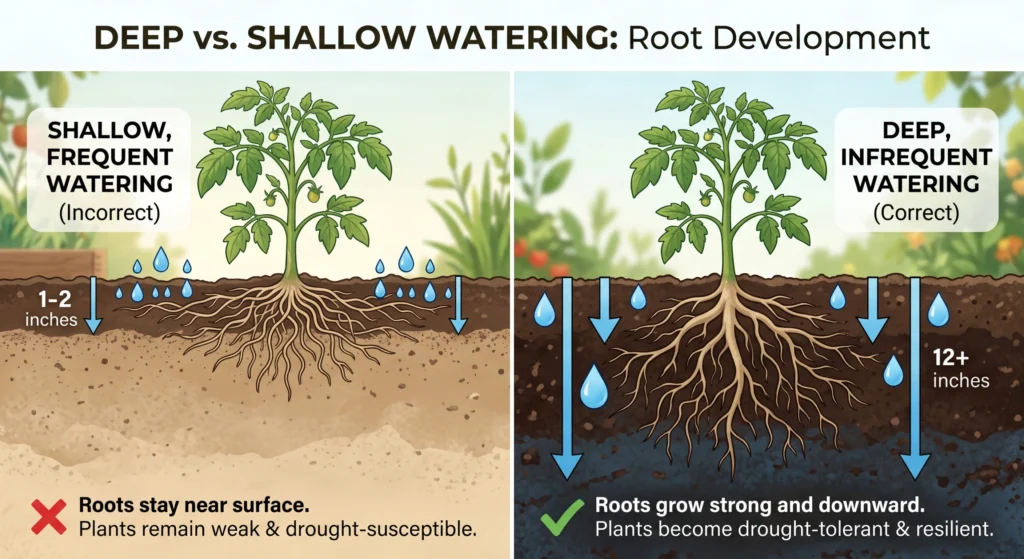
Deep watering done less often, encourages roots to grow downward into cooler, more stable soil that holds moisture longer. A plant with a deep root system is naturally more resilient to heat waves, dry spells, and the occasional missed watering day.
For most garden beds and established plants, this means watering thoroughly two to three times a week rather than lightly every day, adjusting based on how quickly your particular soil dries out. Sandy soil drains fast and may need more frequent watering. Clay-heavy soil holds moisture longer but can also stay soggy if you’re not careful, so it needs less frequent but still thorough watering.
A simple way to know you’ve watered deeply enough is to check how far the moisture has traveled a few hours later. For most vegetable and flower beds, you’re aiming for water to reach six to eight inches down. For trees and shrubs, closer to twelve inches or more.
Watering by Plant Type
Different plants have genuinely different needs, and lumping everything into one watering routine is where a lot of people go wrong.
Container Plants and Hanging Baskets
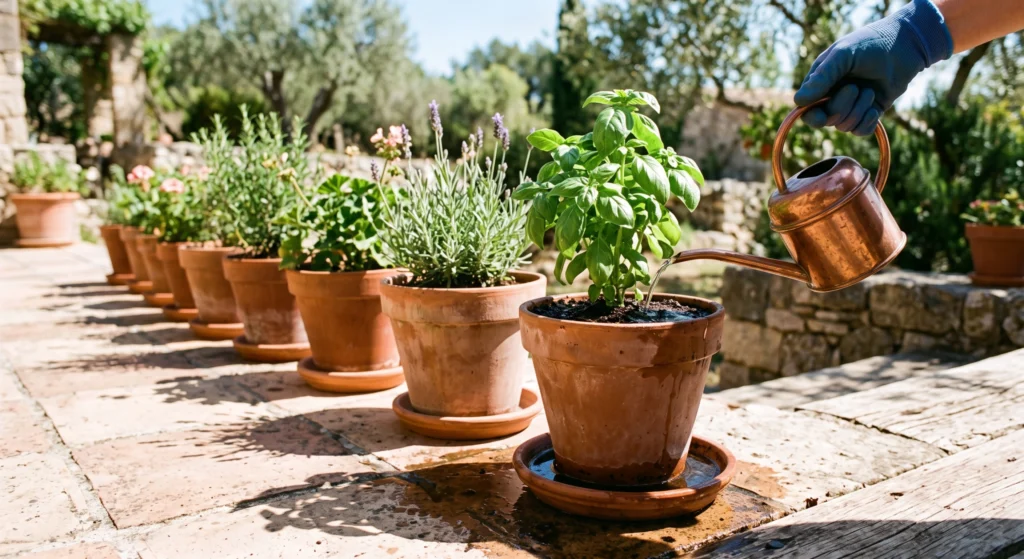
Pots dry out far faster than garden soil because they’re exposed to air and heat on all sides, not just the top. During a heat wave, containers may need watering once or even twice a day, especially smaller pots and hanging baskets, which have less soil mass to hold moisture.
Terra cotta pots dry out faster than plastic or glazed ceramic because the material itself is porous and wicks moisture away. If you’re using terra cotta in a hot climate, plan on watering more often or consider switching materials for particularly sensitive plants.
Adding a saucer underneath containers can help catch runoff and give roots a chance to draw up extra moisture, though you’ll want to empty standing water after an hour or two to avoid root rot.
Garden Beds and Vegetable Gardens
Vegetable gardens, especially fruiting plants like tomatoes, peppers, and squash, need consistent moisture during hot weather because inconsistent watering leads to problems like blossom end rot and split fruit. Drip irrigation or soaker hoses work particularly well here because they deliver water slowly and directly to the root zone without wetting the foliage.
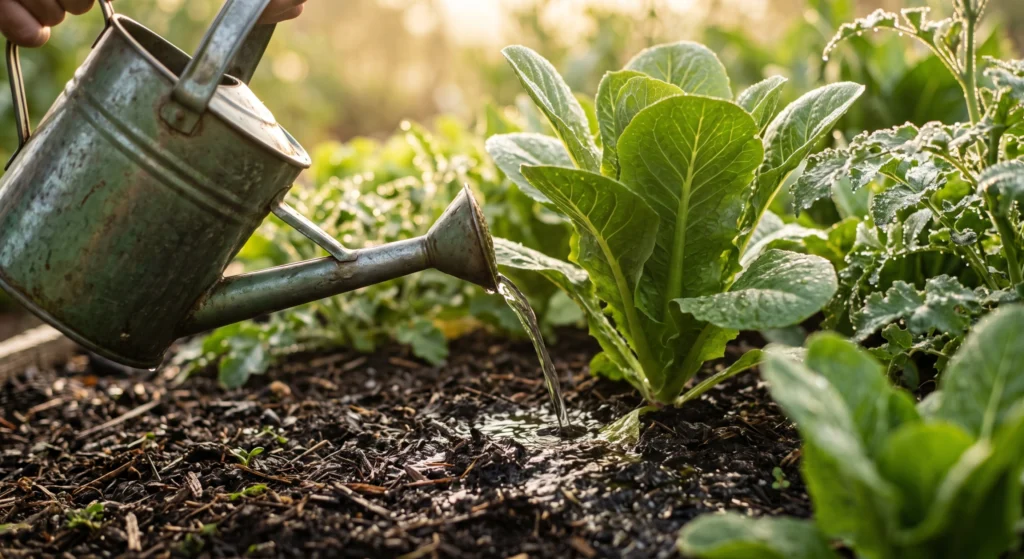
If you’re hand watering, aim the hose or watering can at the base of the plant rather than spraying the whole bed. This gets water where it’s needed and reduces the amount lost to evaporation off leaf surfaces.
Lawns
Grass has a different strategy for surviving heat. Most lawns do better with deep watering once or twice a week rather than daily light sprinkling. Watering deeply encourages grass roots to grow deeper into the soil, which makes the whole lawn more drought resistant over time.
A general guideline is about one to one and a half inches of water per week, including rainfall, delivered in one or two sessions rather than split into many short ones. You can check this with something as simple as a tuna can placed in the sprinkler’s path.
Trees and Shrubs
Established trees and shrubs have deeper root systems and can often go longer between waterings than smaller plants, but during extended heat waves, even mature trees benefit from a slow, deep soak at the drip line, which is the area under the outer edge of the canopy where most of the active feeder roots are located. Newly planted trees and shrubs need much more frequent attention, since their root systems haven’t spread out yet.
Mulch Is Doing Half the Work For You (If You’re Using It)
If there’s one change that makes the biggest difference with the least effort, it’s mulching. A two to three inch layer of organic mulch, whether that’s wood chips, straw, shredded bark, or dried leaves, slows evaporation from the soil surface significantly and keeps root zones cooler.
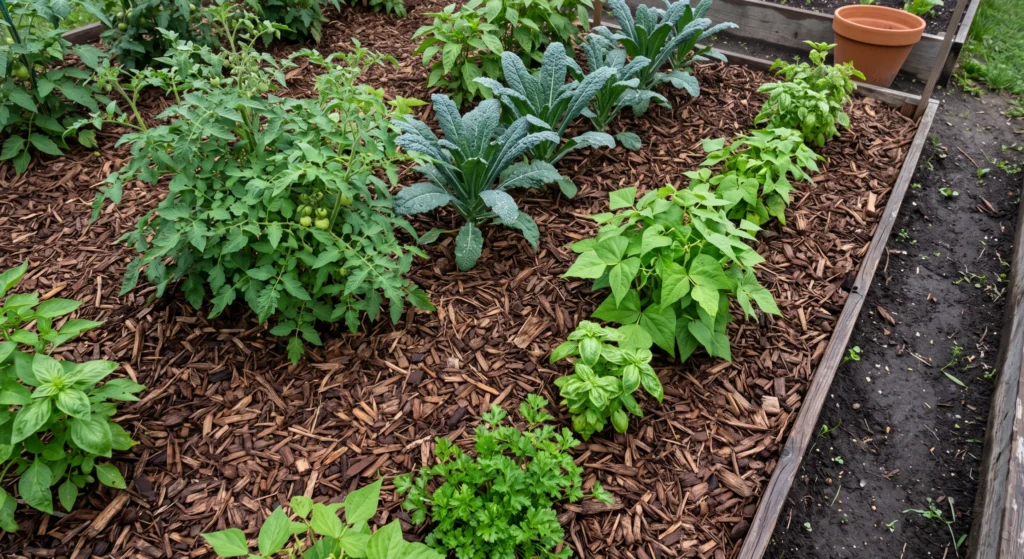
Mulch also suppresses weeds that would otherwise be competing with your plants for the same water. Over time, as organic mulch breaks down, it improves soil structure, which helps the ground hold moisture more evenly.
The main thing to watch for is keeping mulch a few inches away from plant stems and tree trunks. Piling it directly against the base traps moisture against the bark and can invite rot and pests.
Common Mistakes People Make in Summer
A few habits show up again and again in home gardens once the temperature rises, and correcting them tends to solve most watering problems on its own.
- Watering on a fixed schedule regardless of conditions. A calendar reminder doesn’t know how hot it’s been or how much it rained. Check the soil instead of just the date.
- Spraying leaves instead of soil. Overhead watering feels satisfying but wastes water to evaporation and can encourage fungal disease if it happens in the evening.
- Ignoring wind. Windy days pull moisture out of soil and leaves even faster than heat alone, so gardens may need extra water on hot, breezy afternoons even if the temperature itself isn’t record-breaking.
- Assuming rain solved the problem. A brief summer shower often wets only the very top layer of soil and evaporates before it reaches the roots. Check soil moisture after rain rather than assuming it did the job.
- Overcorrecting into overwatering. Constantly soggy soil suffocates roots and invites rot just as surely as drought stresses them. More water isn’t automatically better.
Should You Switch to Drip Irrigation or Soaker Hoses?
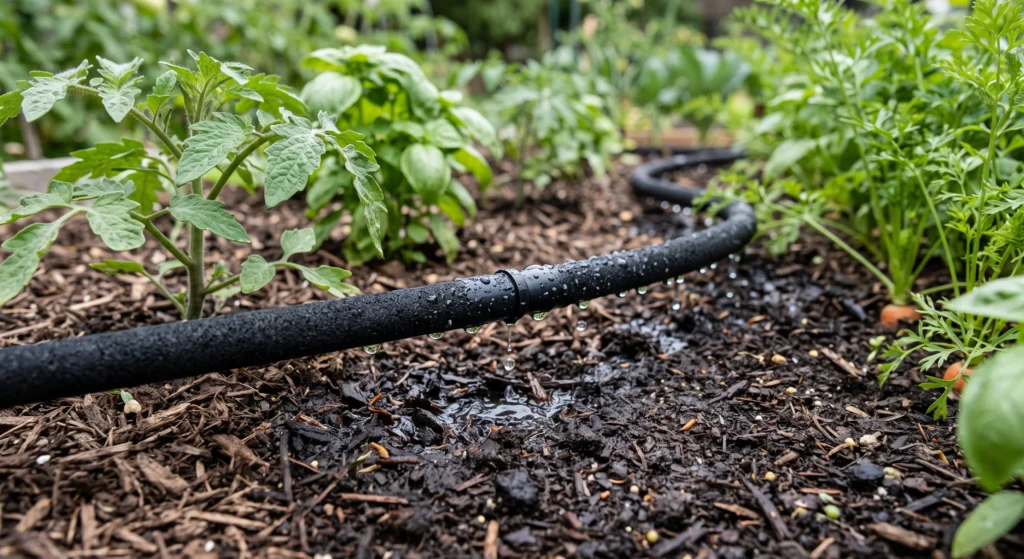
If you’re finding yourself out in the garden every single day during summer, it might be worth investing in drip irrigation or soaker hoses connected to a simple timer. These systems deliver water slowly and directly to the soil at root level, which cuts down dramatically on evaporation compared to sprinklers or hand watering.
They’re particularly useful for vegetable gardens and beds with a mix of plant types that all need fairly consistent moisture. The upfront setup takes a bit of time, but for anyone managing a larger garden through a long, hot summer, it tends to pay off in both water savings and plant health.
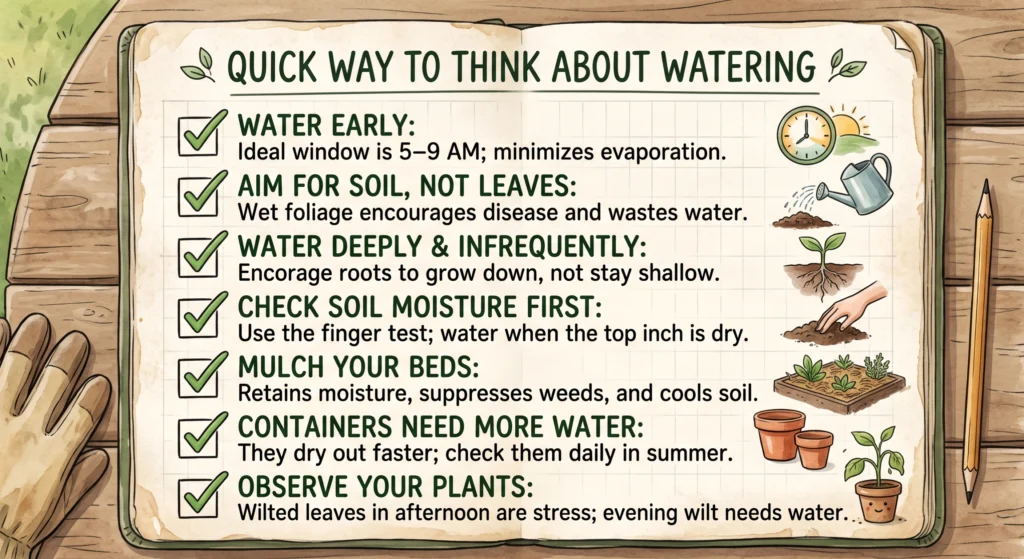
A Quick Way to Think About It
If you’re not sure where to start, this rough framework covers most situations:
- Water early morning whenever possible
- Check soil moisture before watering rather than following a fixed schedule
- Water deeply and less often instead of shallow and daily
- Aim water at the soil, not the leaves
- Add mulch around beds and containers to slow evaporation
- Increase frequency for containers and new plantings, since they dry out fastest
- Adjust for wind and extended heat waves, not just temperature alone
None of this requires special equipment or a complicated routine. It’s mostly about timing and paying attention, which is honestly true of most gardening problems once you get past the beginner stage. Plants are pretty good at showing you what they need. The trick during hot weather is knowing which signals actually mean something and which ones are just a plant doing what it naturally does under the afternoon sun.
Get the timing and depth right, and most gardens handle summer heat far better than people expect, even without daily intervention.