How to Reduce Water Usage in Your Garden
My water bill had a weird habit of becoming much more interesting every summer. July was usually the month when…
 By Plant Calculator Editorial Team
14 min read
By Plant Calculator Editorial Team
14 min read
On this page
My water bill had a weird habit of becoming much more interesting every summer.
July was usually the month when I noticed it. I would open the bill, look at the number, and blame the weather. It was hot. Of course we’d used more water. The garden needed it.
Except that wasn’t really the whole story.
Once I started paying attention to what I was doing with the hose, I found plenty of water disappearing for reasons that had very little to do with the plants. I was watering the plant at the wrong time of day. Bare soil was in full sun for hours. The sprinkler was happily spraying the edge of the lawn, the path, and occasionally the sides of the house.
The plants were receiving water. So did everything else.
You do not have to give up a lush garden to use less water. Most of the savings come from changing a small number of habits and making the garden better at holding onto the water it already receives.
Start With the Soil
It’s tempting to start with equipments.
You start looking at drip irrigation kits, timers, rain barrels, fancy moisture sensors. There are some very useful gadgets out there, but there’s a much less exciting place to start: the soil.
Because if your soil can’t hold water properly, you’re going to spend a lot of time replacing the water you just lost.
Sandy soil is the evident example. Water can move through it incredibly quick, sometimes leaving the root zone before plants have had much chance to use it. Clay soil has almost the contrary problem. It can hold on water tightly, become compacted, and leave you with a surface that is either bone dry or unpleasantly soggy depending on the weather.
Neither situation is particularly helpful.
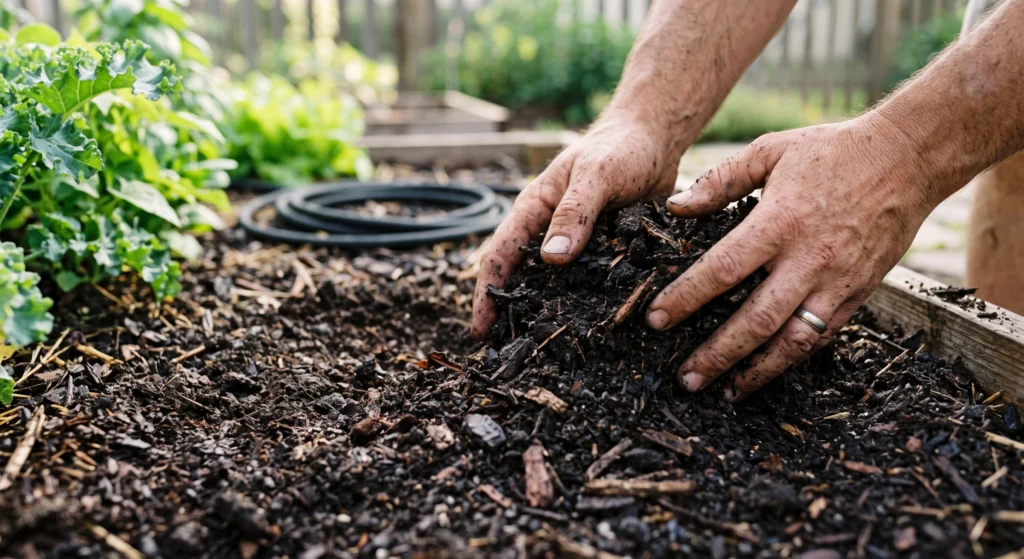
Adding organic matter can make a surprisingly noticeable difference. Compost, well-rotted manure, leaf mould, or whatever good-quality organic material is easily available in your area can improve the structure of the soil over time.
I wouldn’t expect miracles after one afternoon with a shovel. Soil takes time.
But keep adding organic matter season after season and sandy soil can become improved at holding moisture, while heavy soil can become looser and easier for roots to work through.
That’s the sort of improvement you notice later, usually when you are not thinking about it. You water the garden and realize the water is soaking in instead of getting away, or you dig down a few centimetres and find the soil is still damp the following day.
If you haven’t got your soil tested before, it’s worth doing that too. Knowing what you are working with makes the rest of your watering decisions considerably easier.
Put Something Over Bare Soil
Bare soil sitting underneath a hot summer sun doesn’t stand much of a chance.
The surface heats up, wind moves across it, and dampness slowly disappears. You can keep replacing that dampness with the hose, of course, but there is a much simpler option.
Wrap it.
Mulch is one of those gardening job that isn’t particularly glamorous. Nobody gets thrilled about spreading bark around a flower bed. However it works.
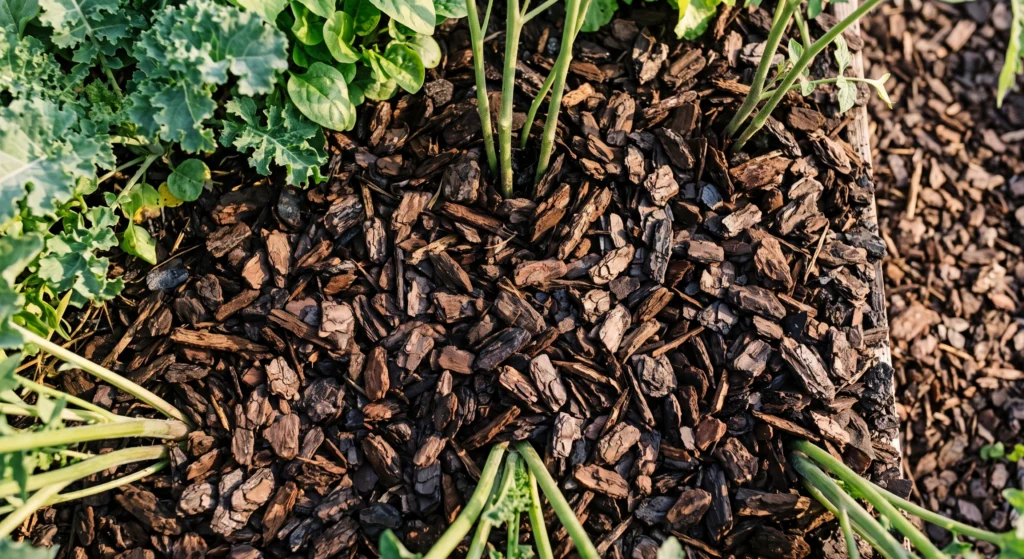
Shredded leaves, straw, bark, grass clippings, and other suitable organic substance can all be used as mulch. They behave differently and break down at different speeds, but the basic idea is the same, to keep the soil covered.
A layer of roughly 5 to 8 centimetres of mulch is enough for many garden beds. Leave a little breathing space around plant stems and tree trunks rather than building a mulch volcano around them.
There is one blunder worth avoiding, though.
Don’t put mulch over completely dry soil and assume you’ve resolved the problem. You’ve basically put a blanket over someone who is already thirsty.
Water the beds properly first. Then put the mulch.
Once you’ve done that, the soil mostly stays cooler and loses moisture much more slowly. By the middle of summer, you’ll observe that you aren’t reaching for the hose quite so often.
Stop Giving the Garden Little Water Every Day
Watering daily feels responsible.
You walk outside in the morning, give every plants a quick sprinkle, and feel like you’ve taken good care of the garden.
The trouble is that a quick sprinkle doesn’t necessarily fulfill much.
A small volume of water may only wet the top layer of soil. That surface then loses moisture quickly, particularly during hot weather, and the plants are thirsty again.
For established plants, a deeper watering is more useful than constantly wetting the surface.
How often you need to do it rely on your soil, climate, plants, and the weather, so there isn’t one magic schedule that works everywhere. But instead of watering every day, check what’s actually happening below the surface.
Push your finger into the soil.
Use a trowel if your finger isn’t quite up to the job.
If the soil is still damp a few centimetres down, there may be no motive to water yet. If it’s dry all the way through the root zone then that’s a different story.
The point isn’t to make your plants wait until they’re critical. It’s to stop watering simply because the calendar suggests you should.
Pick a Better Time of Day
I’ve always found it somewhat funny that we can spend so much time trying to conserve water and then choose the hottest part of the day to pour it onto the garden.
Midday watering is hardly your best option.
The sun is high, temperatures are up, and evaporation is working against you before the water has had much opportunity to drench into the ground.
Mornings are usually the easiest choice.
The air is cooler, the soil has more time to soak the water, and any moisture that lands on foliage has plenty of daylight in which to dry.
Early evening can work too, especially if mornings don’t fit your routine. I’d still rather water in the evening than at the hottest point of the day.
Just don’t turn the garden into an overnight rainforest. Plants with wet foliage sitting through a cool, humid night can be more prone to fungal problems.
Really, the best watering time is the one you’ll actually stick to while avoiding the hottest part of the day.
Grow Plants That Like Your Weather
There is only so much water-saving you can do if you’re constantly trying to persuade the wrong plants to survive in the wrong place.
Put a thirsty plant in a hot, exposed corner and it will need your attention every time the weather turns warm.
Choose something suited to those environments instead and suddenly the garden becomes much easier.
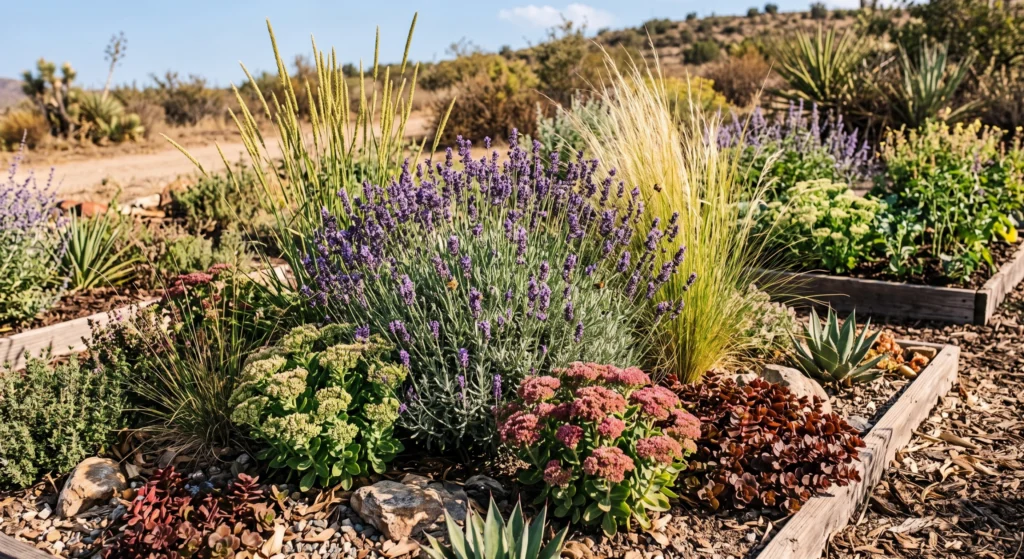
Lavender, rosemary, sedum, yarrow, and many ornamental grasses are comfortable with relatively dry conditions once they are established. Native plants can be particularly useful since they’re already adapted to the climate and rainfall patterns of the area.
This is one of those cases where the old gardening recommendation about putting the right plant in the right place really does earn its keep.
A plant that likes dry soil probably shouldn’t be living at the bottom of a soaked garden bed. Something that needs constant moisture isn’t going to enjoy spending all afternoon beside a hot wall.
Pay attention to those dissimilarity.
You can also segregate plants according to their water requirements. Gardeners sometimes call this hydrozoning, although you don’t need to recollect the term to use the idea.
Keep plants that need regular watering jointly.
Give the drought-tolerant plants own space.
Otherwise, you’ll end up soaking the whole bed because one thirsty plant happens to be sitting next to five plants that would have been perfectly happy with much less.
Give Rainwater Somewhere to Go
Every time it rains, a surprising amount of water can disappear from your property before the garden absorbs any of it.
It runs off the roof, into the sewage, down the drain, and that’s that.
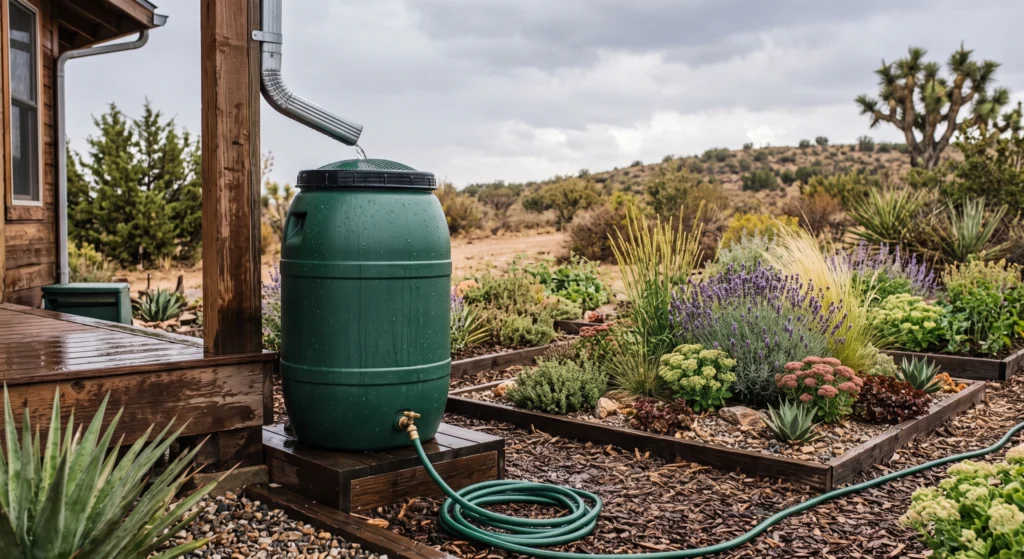
A rain barrel gives some of the water another destination.
You don’t need anything complicated. A suitable barrel connected to a downspout can collect rainwater for later use during dry weather.
There are a couple of things I would definitely take seriously.
Keep the barrel covered. Open water is summons for mosquitoes and debris.
Raise the container off the ground if you’re planning to connect a hose, because a little extra height gives gravity a chance to help.
And provide excess water some space to go. A serious downpour can fill a small barrel surprisingly rapidly, and you don’t want all that overflow sitting against the foundations of your house.
Check local regulations too. Rainwater collection rules vary according to to place.
For a small garden even one barrel can be surprisingly useful. Put another under a second downspout and you can gather considerably more without doing anything particularly clever.
Let the Water Go Where the Roots Are
Sprinklers have their place.
They’re easy. Turn them on, walk away, and come back later.
They’re also rather enthusiastic about watering things that aren’t plants.
A little wind can push the spray to the pavement. Some water lands on the leaves. Some evaporate. Some ends up on the lawn when you’re trying to water the vegetable bed next to it.
Drip irrigation takes a different method.
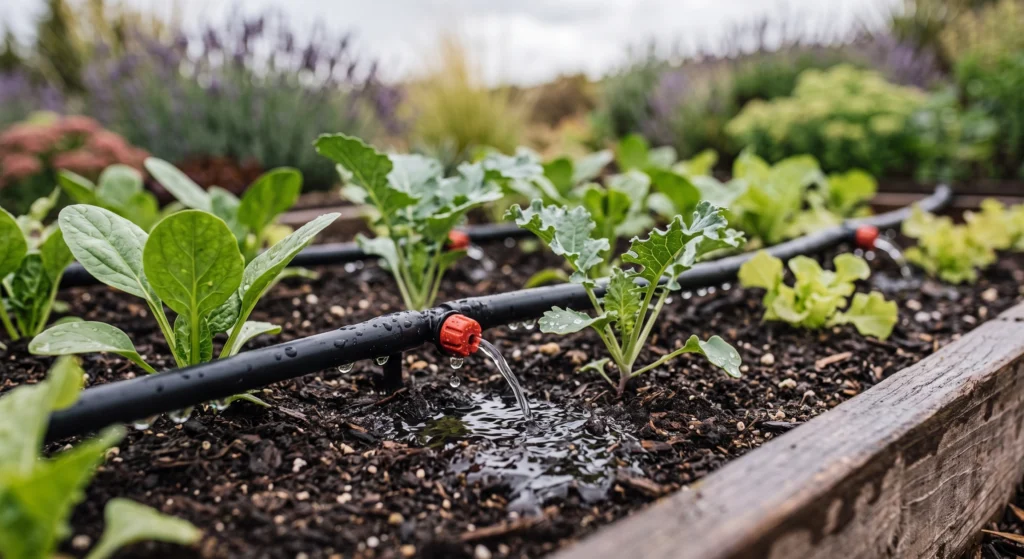
Instead of tossing water across the garden, it releases water slowly near the plants themselves. Soaker hoses work on a same principle, although they’re considerably simpler.
The first time I looked at drip irrigation, I assumed it was going to have pipes, tools, and a weekend I wasn’t prepared to sacrifice.
It turned out to be much less striking.
Many home kits simply connect to an outdoor tap and use adjustable tubing with small emitters. Once everything is positioned properly, you can add a timer and let the system handle the scheduled watering.
It’s not necessary for each and every garden, but if you’re watering a lot of beds by hand, it’s worth considering.
Ask Yourself How Much Lawn You Really Need
The lawn can become the biggest water user in the garden.
A large stretch of perfectly green grass looks great, but keeping it that way through a hot, dry summer can demand an impressive amount of water.
So ask yourself a slightly uncomfortable question.
Does all of it actually need to be lawn?
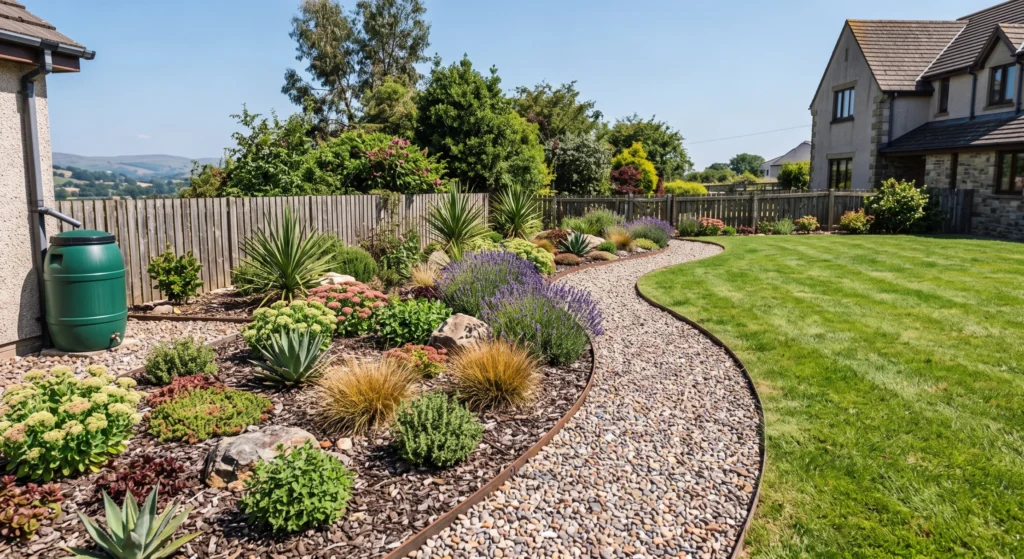
You don’t have to remove the whole thing. Even replacing a section with planting beds, ground cover, paths, or another suitable landscape feature can reduce the amount of turf that needs watering.
If you want to keep the lawn, there are smaller changes you can make.
Raise the mower height.
Longer grass shades the soil and its own roots, helping it hold moisture for longer than grass cut extremely short.
And don’t panic when the lawn turns brown during a dry spell.
Many types of turf can go dormant when water becomes scarce. Brown doesn’t automatically mean dead. Once conditions improve, the grass can recover.
A slightly less perfect lawn is considerably cheaper than trying to force it to stay bright green through every dry week of summer.
And honestly, most people walking past your house probably aren’t judging it as closely as you think they are.
Fix Leaks Before They Become Habits
Leaks are boring thing to check, which is exactly why it gets skipped. A dripping hose connector or a small hairline crack in an irrigation line can waste real water for months without anyone finding it until the bill shows up.
Walkthrough the whole watering setup every other months. Hose connections, taps, any irrigation fittings, feel around for slow leaks. Old sprinkler heads are another offender. Mine drifted out of alignment at some point and spent what was probably an entire month watering the side path instead of the actual bed before me noticing.
Find the Leaks You Don’t Notice
Greywater, the gently used stuff from sinks, showers, or the washing machine, can be diverted to ornamental plants in a lot of cases. Takes a bit of care, since not every soap or detergent plays nice with plants, but there are greywater-friendly products made specifically for this if you want to go that route appropriately.
There’s a much sluggish version that still helps. Leave a bucket in the shower to catch the water while it’s warming up, then tip it onto pots or beds afterward. Feels like nothing in the moment, but it adds up over a few weeks into a noticeable amount of water that would’ve gone down the drain for no reason.
Group Container Plants Instead of Spreading Them Out
Pots on a patio or balcony lose less water when they’re grouped together rather than spread out across the whole space. Grouped plants create a slightly more humid pocket of air around themselves, which slows how fast the soil dries out.
Larger pots matter here too. More soil means more stored water, and a slower dry-out compared to small pots, which can go bone dry in a single hot afternoon if you’re not paying enough attention.
Check the Forecast Before You Water
Probably the single easiest change , and the one nearly everyone skips anyway. Look at the forecast before you turn the hose on. Rain coming tomorrow or the day after? Skip the watering session, it’s not needed.
Smart irrigation controllers do this automatically, pulling local weather data and adjusting the schedule on their own, skipping a cycle ahead of rain and stepping it up during a heat wave. They’re not cheap upfront, but on a bigger garden with an existing automated system already in place, they tend to pay for themselves through the water bill eventually.
Common Questions About Garden Water Use
Is it better to water in the morning or the evening?
Morning, most of the time. Cooler air means less evaporation, and the leaves get a full day to dry out before dark, which keeps fungal problems down. Evening works fine as a backup if mornings just don’t happen for you.
How often should established plants actually get watered?
Depends on your soil, what you’re growing, and where you live, so there’s no number that applies everywhere. As a rough starting point, mulched beds in decent soil usually do fine on one or two deep waterings a week through summer rather than a light daily splash. Containers dry out faster and can need daily attention once it’s genuinely hot.
Do drought-tolerant plants need any watering at all?
Yes, particularly in the first year or two while they’re still establishing roots. Once they’re settled, most need far less than a typical garden plant, but drought-tolerant was never the same thing as maintenance-free, especially during a genuinely long dry stretch.
Is rainwater actually better than tap water?
Plenty of gardeners swear their plants respond better to it, likely because it skips the chlorine and added minerals in treated tap water. It’s also free, which on its own makes a rain barrel worth having.
Where should someone actually start?
Mulch, no contest. It’s cheap, takes an afternoon, and you’ll notice the difference in how often you’re reaching for the hose within a couple of weeks.
Where to Start
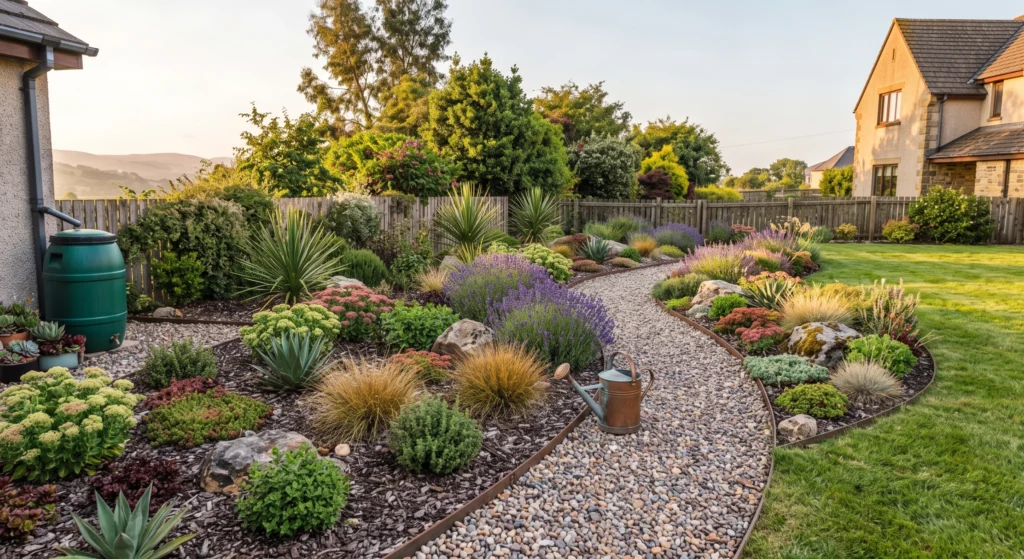
You don’t need to redo the entire garden this weekend. Pick one thing, a mulched bed or a single rain barrel, and let it prove itself before you move on to the next. It tends to snowball anyway once you start. Better soil holds water longer, so you’re watering less, which grows stronger roots, and stronger roots handle the next dry spell without much drama.
Mine turned out healthier once I stopped watering on autopilot every evening and actually paid attention to what it needed instead. The water bill noticed before I did, which is usually how you know something worked.