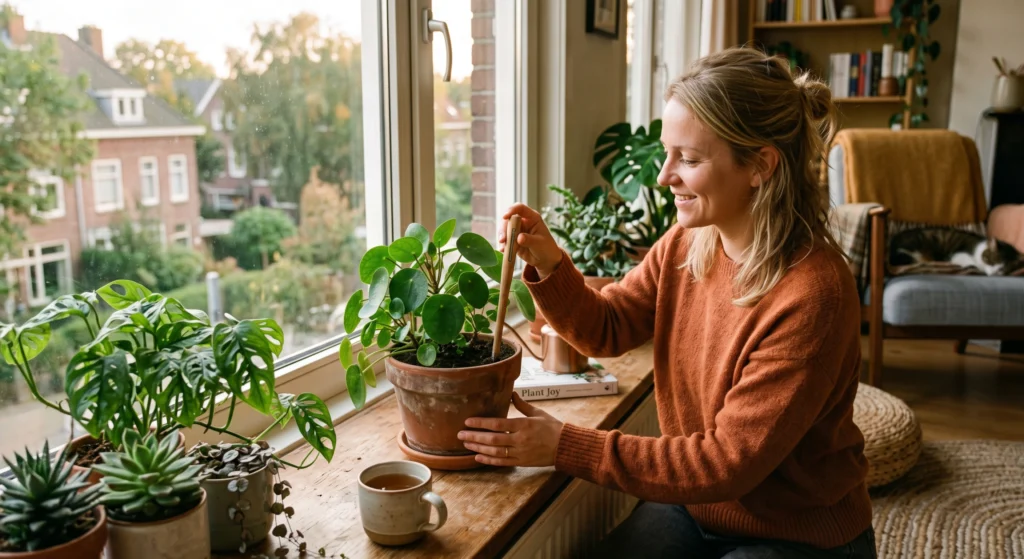
Common Plant Watering Mistakes to Avoid
The vast majority of dying houseplants don’t die from lack of care. They die from too much care. The watering…
 By Plant Calculator Editorial Team
9 min read
By Plant Calculator Editorial Team
9 min read
On this page
The vast majority of dying houseplants don’t die from lack of care. They die from too much care. The watering is the task that can be performed daily. As a result, the plant is slowly drowning, while you are patting yourself on the back for being diligent. And if you have been having a hard time with your pothos or peace lily for seemingly no reason, most probably, you will find the reason in your watering can.
Here are the major mistakes people make while watering their plants, and ways to correct them easily and simply.
Watering according to the schedule instead of watering when needed
Regularity can be one of the biggest threats to a plant’s health. You get the recommendation to water your fiddle leaf fig once a week, and you place this information in your planner, to never deviate from it again.
But the truth is, your plant’s water needs change with its surroundings, including light, temperature, humidity, pot size, soil type, and the season. Thus, your plant may need watering every five days in July and stay unresponsive for three weeks in December.
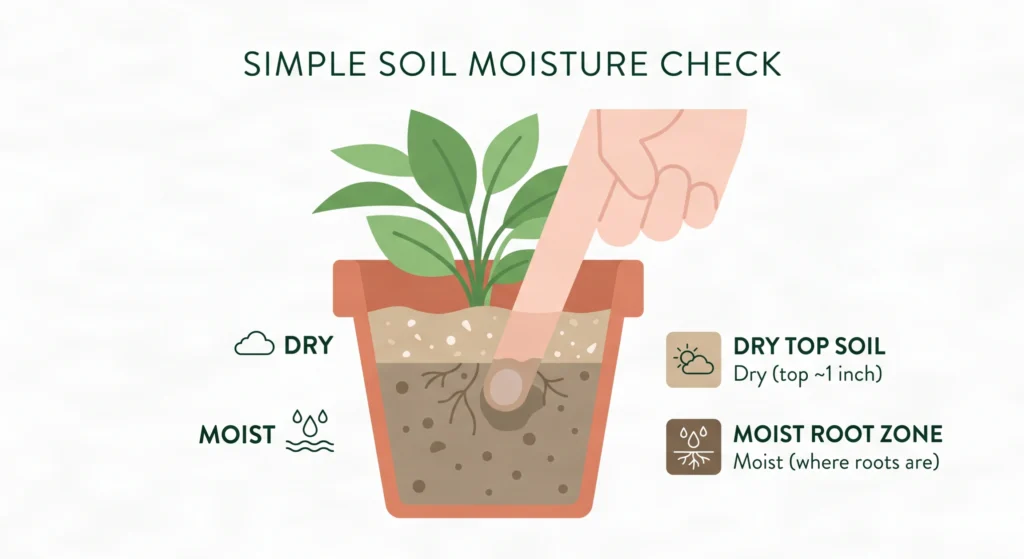
So, why not use the same way the plant uses to tell its needs? Stick your index finger into the soil till the second knuckle. If the soil sticks to it, leave it alone. If it comes out completely dry, water the plant. There is no simpler way of watering.
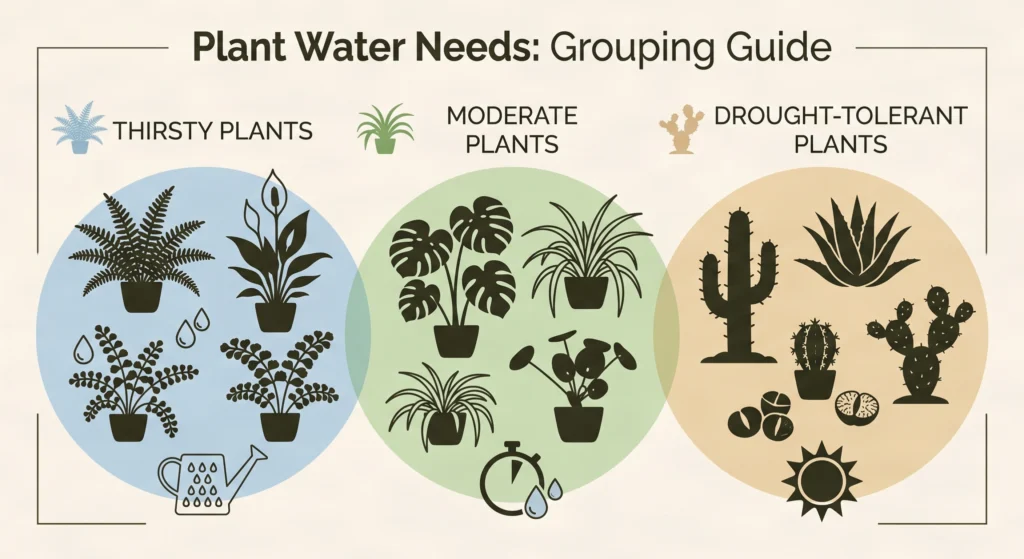
However, there are several exceptions. Succulents and cacti prefer soil that is bone-dry before the next drink. Tropical plants (ferns, calatheas) need soil to be always somewhat wet. So, just find out to which group your plant belongs.
Using tiny sips rather than deep soaking
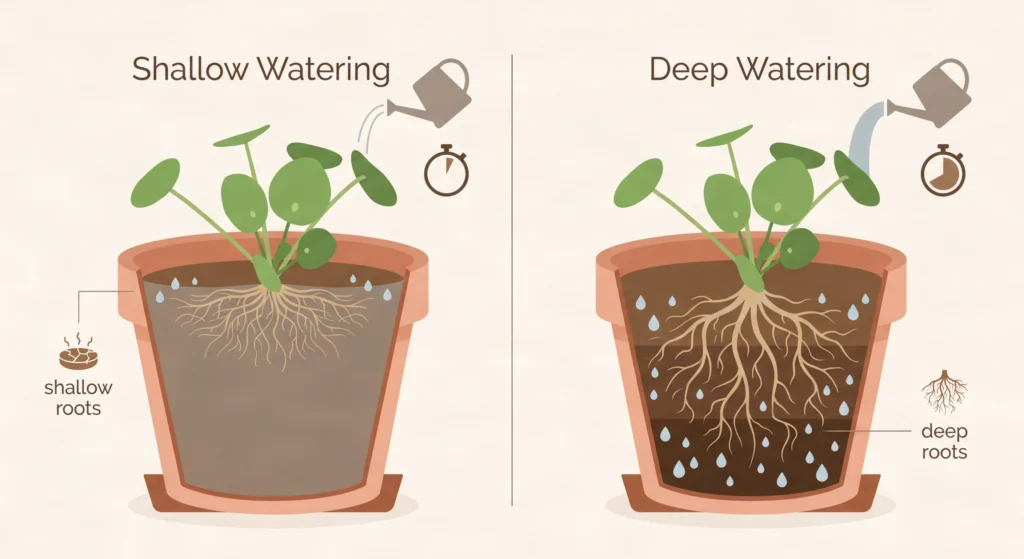
The idea of pouring a cupful of water over the top every two days sounds gentle, but it’s actually one of the most damaging things you can do.
Watering in a shallow way just means that the upper inch or two of soil gets wet. The roots will grow down where the moisture is, so they’ll remain shallow, growing close to the surface, which is prone to drying quickly. At the same time, the bottom half of the root ball ends up in constantly dry soil.
Properly water the plant. Pour gently and evenly over the entire surface until water drains freely from the pot through its drainage holes, allowing the plant to soak the water thoroughly. This helps develop roots downward and outward, which increases the resilience of the plant between waterings and makes it more tolerant if you plan to be absent for a weekend.
The occasional deep watering is better than frequent shallow watering. In fact, nearly all problems related to watering come from doing this backwards.
Leaving the pot sitting in its own runoff
Putting the pot in its own runoff water
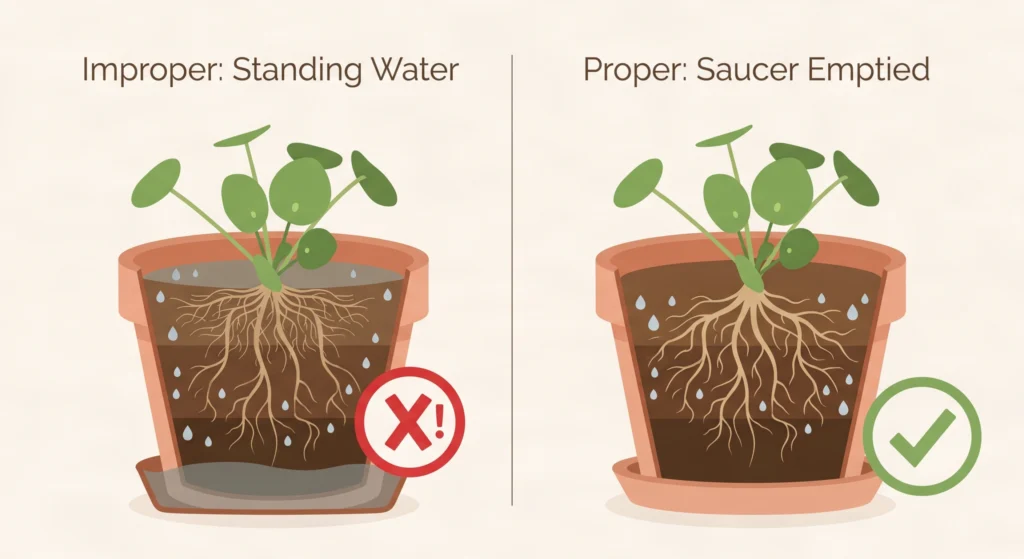
You have done the thorough soaking. Good. You have then placed the pot straight into a decorative cachepot or in a saucer filled with water, and the result is that the soil from the lower two inches remains wet all the time.
Roots need oxygen just as much as they need water. The waterlogged soil deprives the roots of oxygen, the root tips rot, and thus the plant becomes unable to absorb water even though it is immersed in it. That is the reason why the overwatered plants look dehydrated. Plants which droop and whose leaves are yellow and soft are watered even more as a result. A terrible little vicious cycle and it kills many plants.
Drain the saucer about fifteen-twenty minutes after watering. With cachepots that do not drain, place the plant in its plastic nursery pot within the cachepot, water it at the sink and return it to the cachepot when it has drained.
Complete neglect of drainage issues
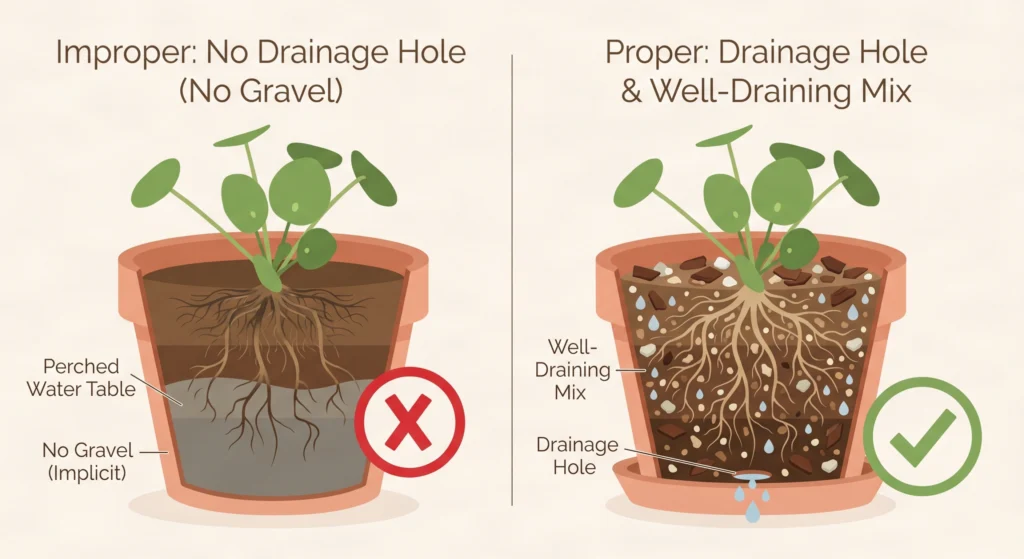
This gorgeous pot without a hole in the bottom is a nice trap. Also, “the layer of gravel at the bottom for drainage” trick does not work as people expect it to work. The thing is that water does not permeate easily from fine soil to coarse gravel. Instead, it accumulates in the soil above the layer of gravel, and, therefore, you have created a new moist zone instead of eliminating the old one.
Drill the hole if possible. Otherwise, use the pot only as a cover for your plant and keep it somewhere else where there is good drainage.
The type of soil is also important in this case. Potting mix sold in standard bags becomes compact and airless in just one year in the pot, and it may neutralize all your efforts to water the plant correctly. Most indoor plants like a much coarser soil with some perlite or bark added to it.
Reading Symptoms Incorrectly
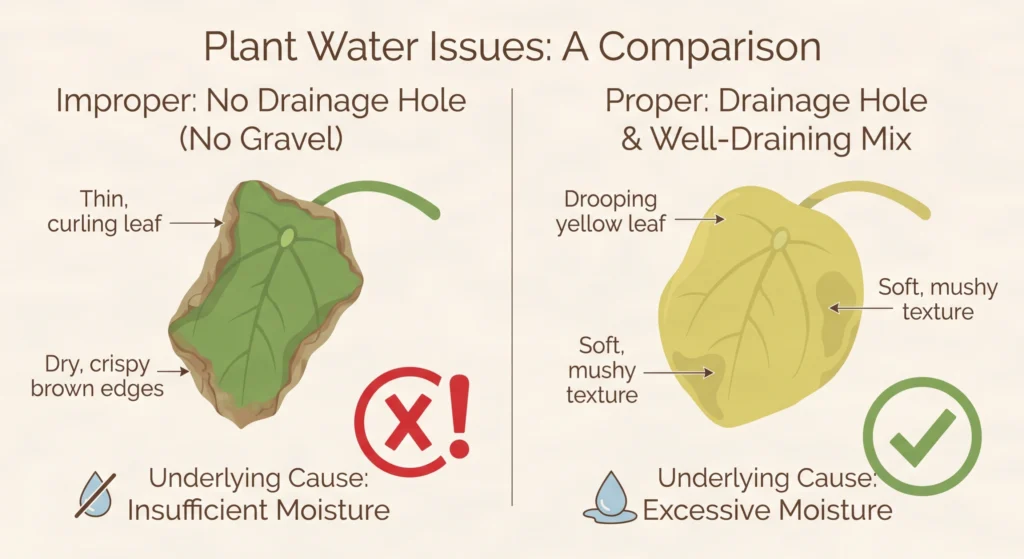
Both overwatering and underwatering appear to be very similar from afar. In both cases, your plant will droop. In both cases, the leaves will turn yellow. In both cases, the edges of the leaves will become crispy eventually.
The thing is that the differences lie in texture and the state of soil.
Underwatered: leaves wilt and have a thin and papery texture, brown edges are crispy and brittle, soil shrinks and pulls away from the sides of the pot, the pot is light when lifted up.
Overwatered: leaves are soft and mushy, yellowing starts from the bottom leaves, the stems in the soil have a squishy texture, the soil smells like a swamp.
This last symptom is the most definitive. Good potting soil smells earthy. Rotten roots smell like pond water. Should you smell this, pull the plant out of the pot and examine its roots. They should be white and firm. Otherwise, remove the rotten roots, replant it into fresh and dry soil, and do not water for a week.
Over-watering with incorrect water and at improper temperatures
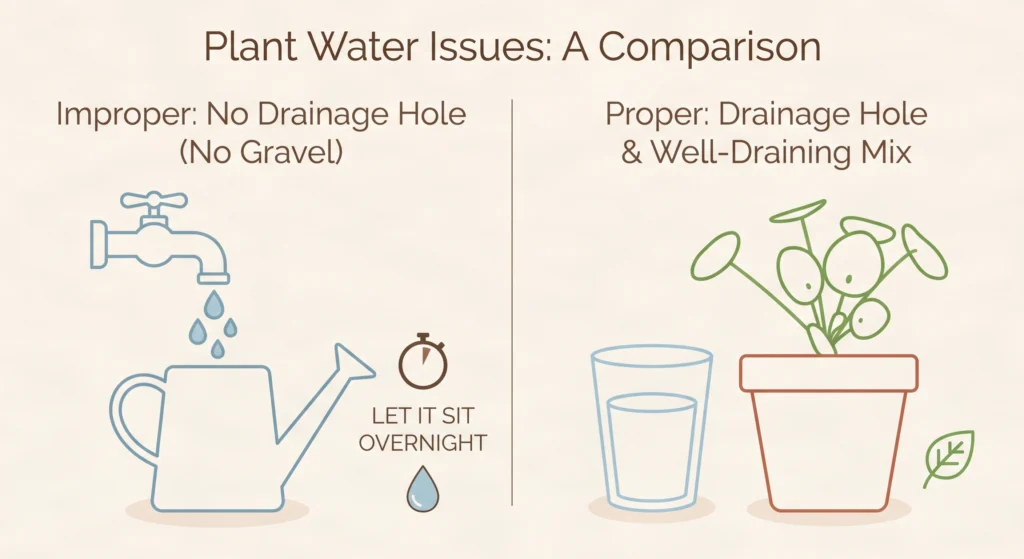
The least important one on the list. Ice-cold water directly out of the tap causes shock to sensitive roots. Room temperature water is gentler, and there’s nothing stopping you from filling your watering can the day before.
Water out of the tap is good for most plants. Some, however, are pickier about water quality. Plants like calathea, marantas, spider plants, and dracaenas tend to develop brown crispy tips due to the fluoride and chlorine found in water treated by municipal water plants. In case you have the ability to use filtered or rainwater, that’s preferable, but not a necessity in any way. After all, brown crispy tips on a spider plant aren’t life-threatening.
Anyways, more often than not, misting is the culprit here. While misting looks caring and helpful, the increase in humidity levels lasts for no more than five minutes. If your plant actually needs a more humid environment, place it in a group with other plants, use a pebble tray or buy a humidifier.
Same treatment for all the plants in the house
The watering day, when you walk from room to room with the watering can, giving everyone the same treatment, is efficient and a little lazy. A snake plant in a shady corner and a monstera near the south window have very different lifestyles.
Sort your plants according to their needs and not by the room. Once you know which shelf has the thirsty plants and which has the plants that don’t need much water, the process becomes faster than watering one plant at a time, and nobody gets more water than they want. In reality, the simplest solution for many people would be to stop watering the succulents on the same day as the others.
Seasonal changes trip up nearly everyone
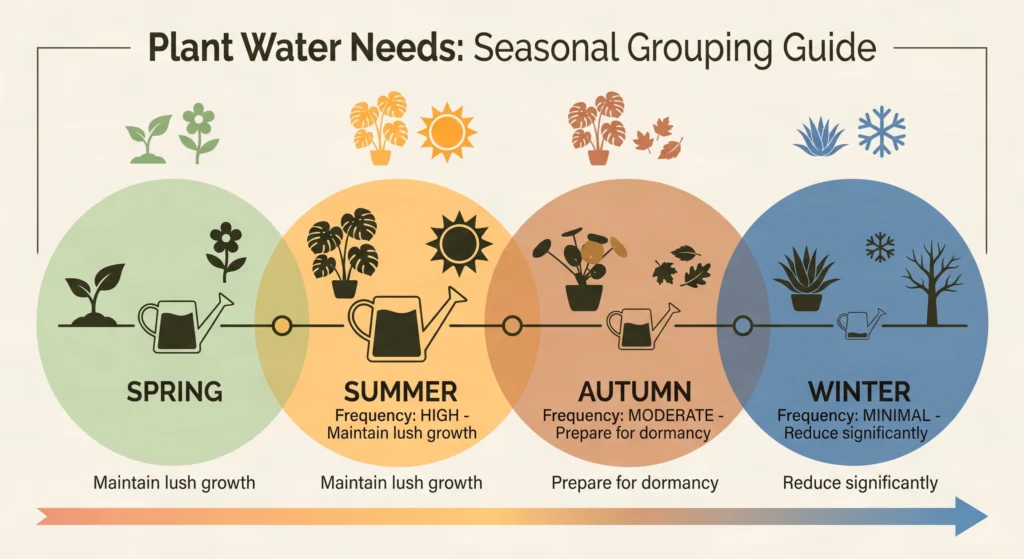
Less light in winter. Slower growth. Water needs drop dramatically. The mistake most people make is that they continue to water their plants at the same rate all the way through November, and that’s why many of them simply rot during the winter months.
Water less when the days grow shorter. It can mean watering once per week rather than daily for a lot of tropicals, and then watering more frequently when new growth resumes in the spring. If there’s just one thing you can change this year, make it this one.
Fast Facts
How often do I need to water my indoor plants? Unfortunately there’s no single figure here because the answer depends entirely on the circumstances, but check the soil two inches down with your fingers and water when it is dry. For most common indoor plants in regular household conditions, this results in watering every five to three weeks.
Can a plant survive being overwatered? In most cases, yes, but only if the rot hasn’t affected all of the plant’s roots. Carefully remove the plant from its pot, cut off the rotted parts of the roots, place it in a new dry mix, and don’t water until the mix dries up.
Do I need to water my plants from the bottom? Yes, when it comes to bottom-watering, it’s the perfect solution for African violet and other plants whose leaves can’t stand wetting; also, in case when soil gets so dried that it won’t absorb water from the top. Just place your pot in a couple of inches of water for about twenty to thirty minutes and then drain it. Perform top-watering every month or two to wash out all the mineral salts that accumulate in the soil.
Is tap water harmful to plants? No, not for most of them, although there are exceptions. Plants that are sensitive to fluoride and chlorine will have brown leaf tips, while letting water settle for an overnight or filtering it helps in that case.
Begin with the finger test only this week. You won’t have to think about it after about a month because that method will make fewer watering errors than anything you can use for your schedule or moisture meter.