How Mulch Helps Plants Retain Water
Water a bare bed in the morning and by mid-afternoon the top inch is already dust. Water the same bed…
 By Plant Calculator Editorial Team
8 min read
By Plant Calculator Editorial Team
8 min read
On this page
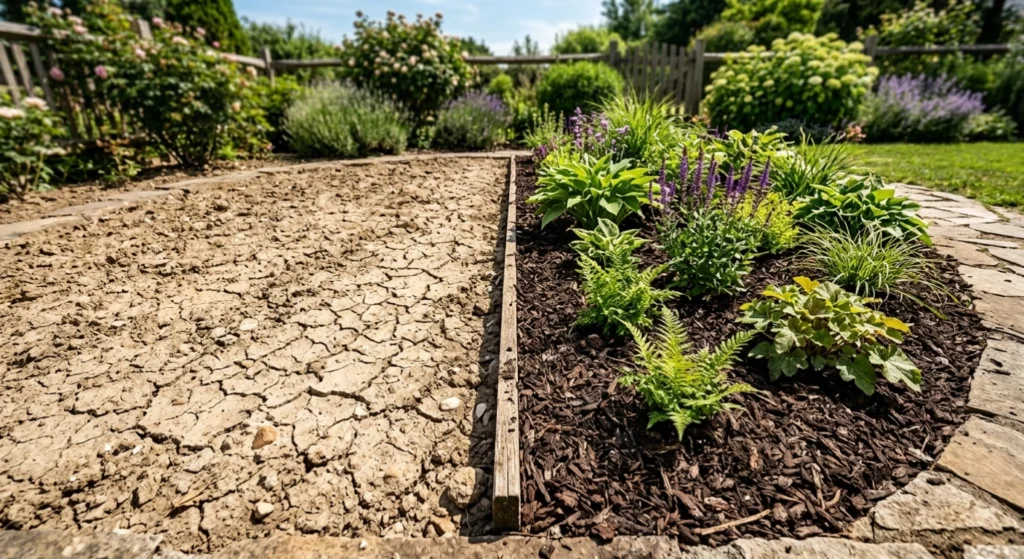
Water a bare bed in the morning and by mid-afternoon the top inch is already dust. Water the same bed with two inches of mulch over it and you can dig down two days later and find it still damp. That difference is not magic, and it is not fertilizer. It is mostly about what happens at the surface of the soil, where sun and wind get to do their work.
Mulch is the cheapest fix most gardens have available, and it is also the one people skip because it feels like a finishing touch rather than a real job.
The thing that draws water out of your soul
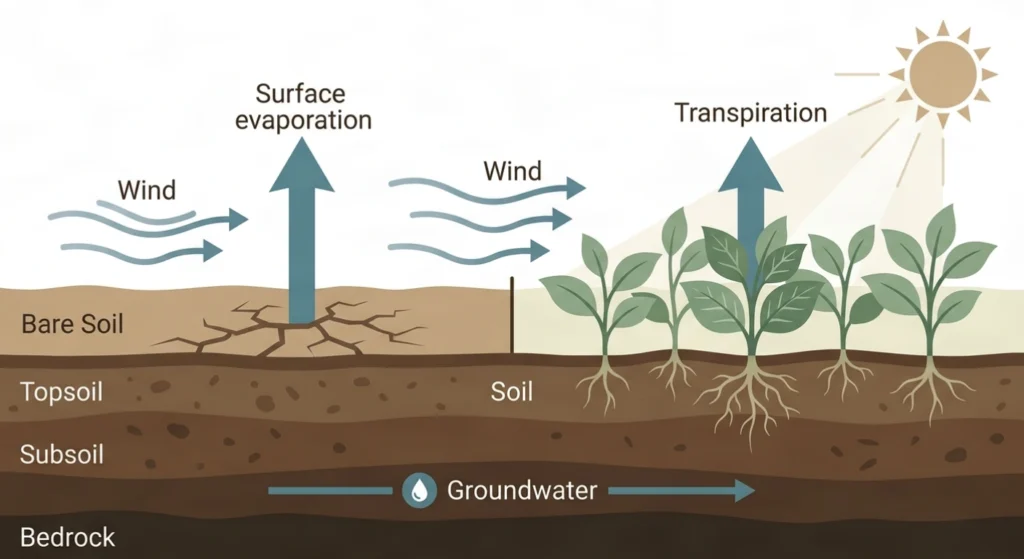
Soil loses moisture in two directions. Plants pull it up through their roots and release it through their leaves, which is the part you want. The other loss is evaporation straight off the soil surface, which does nothing for anybody.
On an exposed bed in summer, that second loss can be enormous. Dark, damp soil absorbs heat all day. Warm soil pushes moisture into the air faster. Wind then strips that humid layer off the surface and replaces it with dry air, so the process restarts. It is a small, relentless engine that runs every hour the sun is up.
Cover the soil and you switch the engine off. Not completely, but enough that most of the water you applied stays where the roots can reach it.
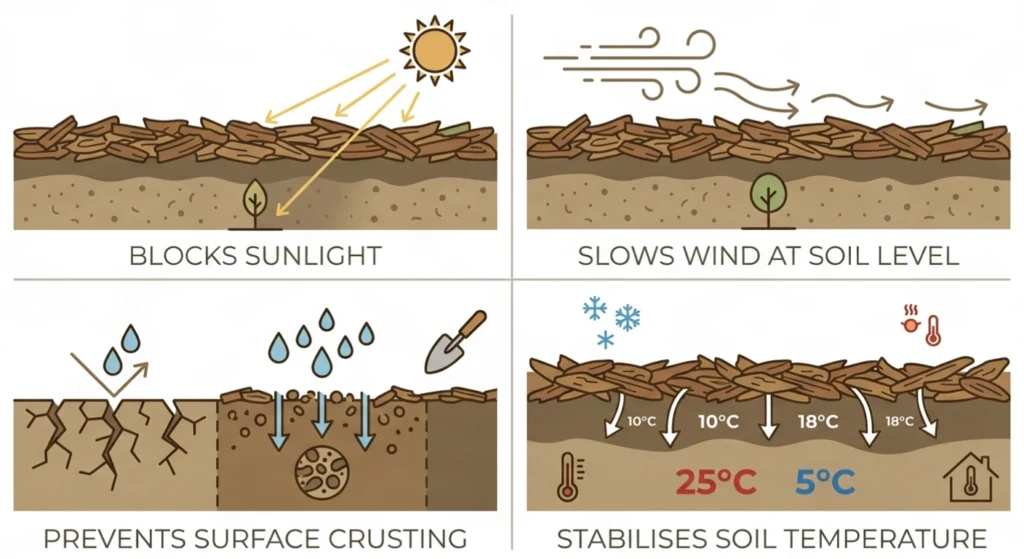
Four effects the mulch layer has at once
It blocks sunlight from hitting the soil. Sun on bare earth is the single biggest driver of surface evaporation. A layer of bark or straw takes that heat instead, and the top of the mulch can get genuinely hot while the soil underneath stays cool.
It slows the wind at ground level. Air still moves through mulch, but slowly. The humid air sitting just above the soil hangs around longer instead of being scrubbed away.
It stops crusting. This one gets overlooked. Bare soil that has been rained on and then baked forms a hard surface crust, and water hitting that crust runs sideways instead of soaking in. So you lose water twice, once to evaporation and once to runoff. Mulch takes the impact of the raindrops and lets water enter the soil at its own pace.
It keeps soil temperature steadier. Roots sitting in cool, even soil are less stressed than roots swinging between hot afternoons and cold nights, and a less stressed plant uses its water more efficiently.
One more that sneaks in: mulch suppresses weeds, and weeds drink. A bed full of crabgrass is a bed where your tomatoes are competing for every drop.
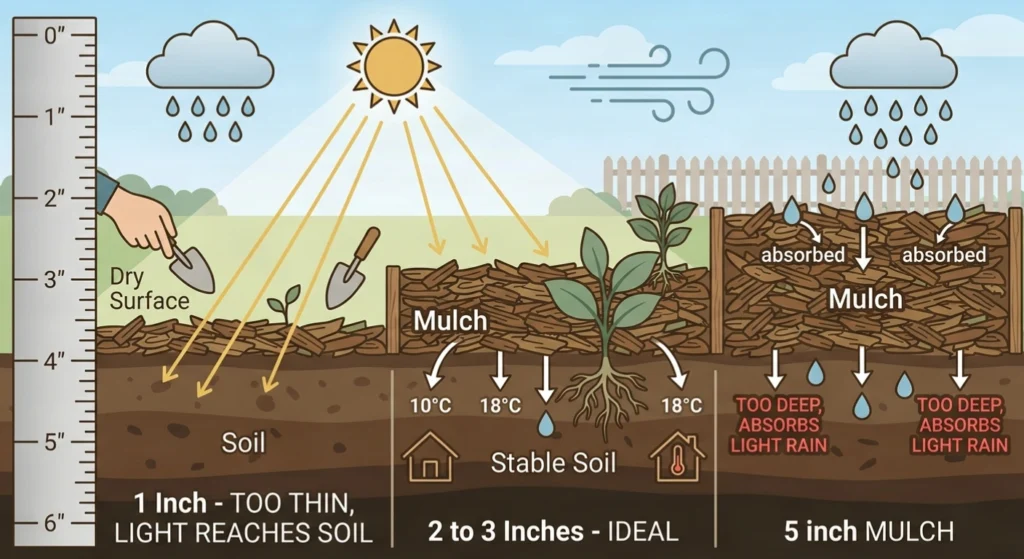
How deep should it be?
Two to three inches is the standard answer and is a pretty good answer. Any thinner than an inch and a half and the light begins coming back into the soil again. Any thicker than four inches and you will encounter another problem; your light rains will never make it to the soil at all since it will be absorbed by the mulch.
The latter problem will surprise some gardeners. A thick mulch layer acts as a sponge covering the root zone. Light rains alone, like those experienced in many summer showers, may make the soil below the surface dry out. Stick a finger through the mulch before jumping to conclusions.
Mulching around trees and shrubs
A few inches from the trunk you must keep the mulch away. Water retention close to the tree trunk increases the risk of disease. You have no doubt observed the mulch volcanoes around municipal street trees; they are doing the tree no favors.
Choosing a mulch for water retention purposes
Different materials retain different amounts of moisture and the ideal mulch type will depend on the plants and how hands-on you are willing to be.
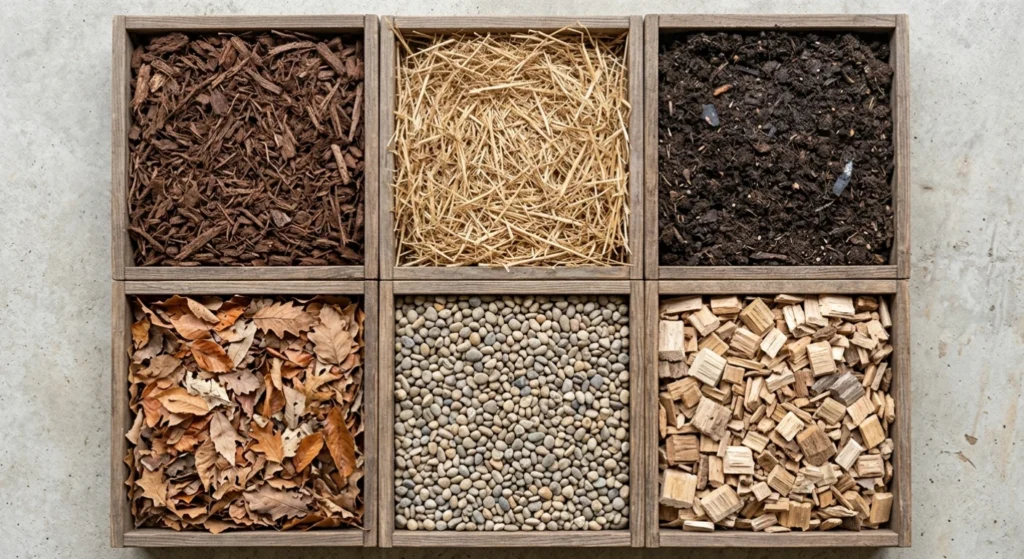
Shredded bark and wood chips
Long-lasting, great in keeping the soil shaded and slow to decompose. This is the one I use for perennial gardens and shrub borders. The shredded bark also forms a more solid mass and will stay in place on slopes compared to bark nuggets that float away in rains and end up in lawns.
Straw
Very useful in vegetable beds. Straw is light-weight, insulating and, come the fall, can simply be tilled back into the soil. Make sure to buy straw and not hay if you don’t like weeding since the latter carries seeds.
Compost
Great at retaining moisture and feeding the soil but will decompose fairly quickly and need replacing. My favorite method for using it is mixing an inch layer with bark; moisture-retention underneath and longevity above.
Leaves
Free and under-rated. Shred them before laying as whole leaves form a waterproof layer, shedding water instead of absorbing it. Just run a mower over a pile a few times and get your mulch and soil conditioner at once.
Gravel and stones
Beneficial where you are using plants that can thrive in drought conditions and do not require annual replacement. However, they retain heat, so avoid using them in places where you have plants that will be uncomfortable with warm soil. Neither do they contribute to soil composition because they lack any material that will degrade.
The best mulch tends to be the type you can obtain in plenty, apply sufficiently and convince yourself halfway through the task.
Plastic sheeting
Beneficial in retaining moisture and is used by commercial farmers for very good reasons. In home gardens, I would only consider using it in a few instances such as melon patches. They prevent air circulation and do not provide anything useful to the soil while they need to be disposed of.
Timing is important here
The timing is more important than many people realize. Mulch stabilizes all of the existing conditions below it, meaning that if you cover dry soil, congratulations, you’ve just ensured that there’ll be a drought in place.
You should always water the soil deeply prior to mulching. Don’t rush and use the hose quickly, make sure the water soaks into the soil thoroughly.
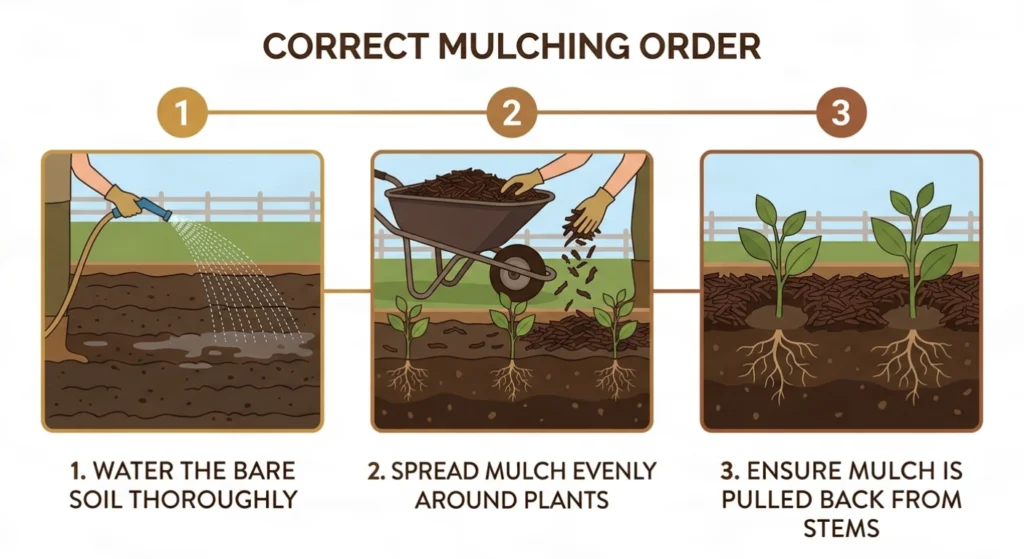
There are two seasons when most people choose to mulch their plants – spring, once the soil has become sufficiently warm, and autumn, to keep it warm for the colder months ahead. Of course, somewhere with hot and dry weather, it is a good idea to mulch in late spring.
How it affects your watering schedule
This is what will save you time, finally. With mulch in place, you won’t be able to rely on the moisture content of the soil surface. The top layer might appear dry when there will be enough moisture two inches below the surface, and watering based on appearance would lead to overwatering your garden.
Simply lift the mulch to touch the soil below.
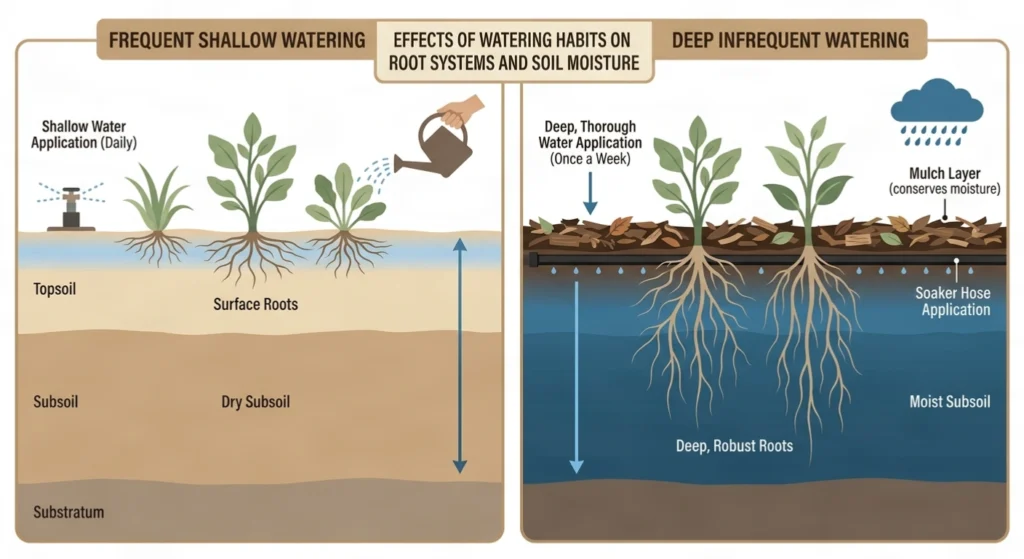
In most cases, mulched gardens should be watered less frequently but deeply. Deep watering will force the plant roots to grow deeper to a cooler and wetter zone, whereas frequent watering will make them stick to the warmer surface layer of the soil. Mulch makes deep watering much easier, as the moisture applied won’t evaporate quickly due to sunlight exposure.
Irrigation systems with drippers or soaker hose under the mulch layer work best. The water goes right to the soil and then gets absorbed by the mulch.
Some common queries
Does mulch prevent water from penetrating into the soil? A typical two or three inches thick layer allows water to penetrate well enough. Issues arise when there is an excessively thick layer applied or when matted entire leaves are used, forming a seal. You should test by watering and seeing whether any water has penetrated after an hour.
How often should I renew my mulch? It depends on type. Bark and wood chips should be renewed twice or three times per year. Straw, compost and leaves will decompose within a year. Check its thickness every spring and add missing amount instead of laying new material from scratch.
Will my plants suffer from nitrogen depletion due to wood mulch? The risk arises only in the contact zone between mulch and soil, and only when wood mulch gets mixed in the soil rather than laid on its surface. For established plants this is not much of a problem. Young plants are more sensitive, keep mulch away from them.
Can I use mulch around container plants? Definitely, and pots tend to dry out more quickly than garden beds, therefore it is especially helpful. Lightly applying a thin layer of bark or gravel on top of potting mix reduces evaporation and prevents crust formation.
Getting started
Take one bed, the one which is always looking thirsty by Thursday. Water it properly, apply two or three inches thick layer of local mulch, and observe the results for a week or so.
The difference tends to be more convincing than all written information. And after seeing this effect first hand, mulch will no longer be perceived as a finishing touch, but the main thing.