Drip Irrigation vs. Hand Watering: Which One Actually Suits Your Garden?
Watering by hand gives a sense of productivity. You’re standing there holding a hose, your plants are getting wet, and…
 By Plant Calculator Editorial Team
9 min read
On this page
Watering by hand gives a sense of productivity. You’re standing there holding a hose, your plants are getting wet, and you feel like a responsible individual after going back inside. But if you see your tomatoes cracking or your lettuce bolting ahead of time or your water bill rising, then the method by which you water might be more important than the frequency. Here is the truth about drip irrigation versus hand watering.
How Each System Works
The hand watering system is straightforward. You take your watering can, hose with a nozzle, or your wand, and direct your water yourself and decide when to stop. All that depends on your presence.
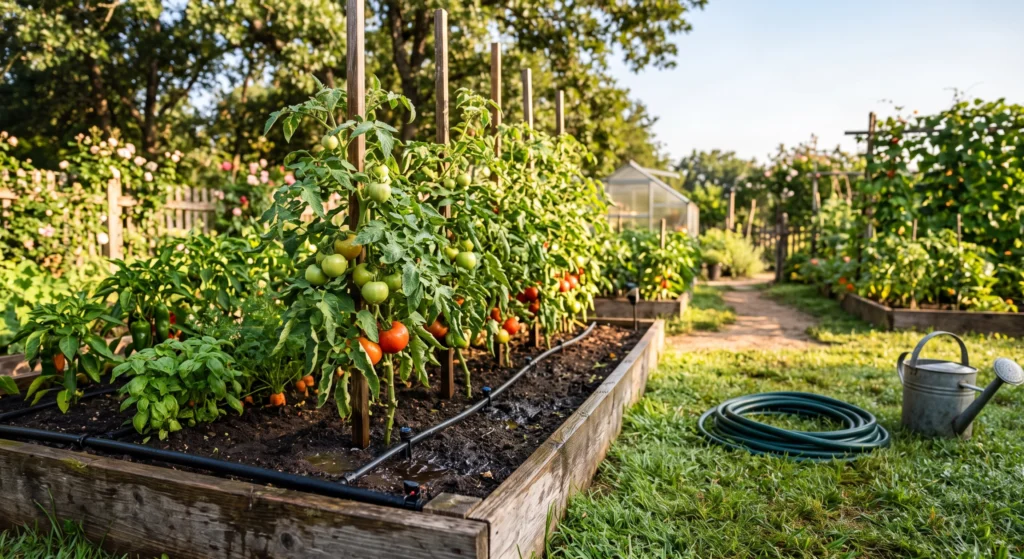
Drip irrigation involves a tube network laid across the beds or row of crops, featuring emitters releasing small amounts of water close to the roots of plants. The basic drip system requires a connection from a hose, a filter, a pressure reducer, tubing, feeder tubing, and emitters. Emitters usually have capacity ratings of half a gallon to two gallons per hour. That is why drip irrigation takes time and looks very uneventful because nothing gets sprayed. It is just the soil becoming darker quietly.
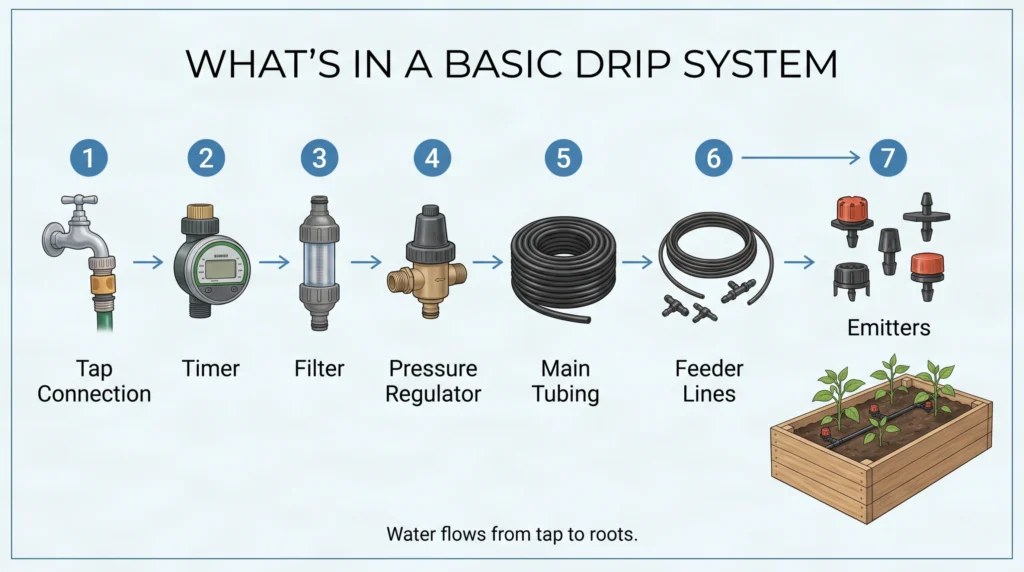
Slowness is the whole idea behind it.
Water Usage: How Drip Outshines
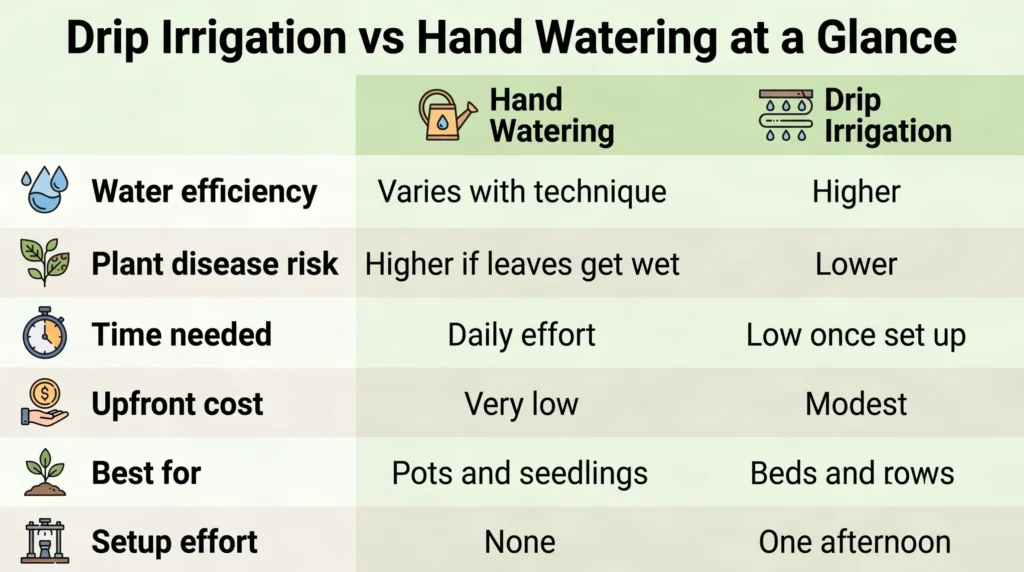
The water which falls on leaves or accumulates in the form of puddles on topsoil may lose much of itself by evaporation long before roots ever get access to it. The water which is sprayed over the bed in the form of a hose spray on a windy day loses a significant amount of its volume to the atmosphere. The use of drip system prevents such losses since it provides a direct route to the soil near the roots and delivers water at an appropriate pace.
Then there is the issue of runoffs. Water sprinkled from a hose over a dry and compacted soil will largely flow down and collect somewhere else without being able to seep into the ground. Just think of how often you have watered your pots until overflowing and found the rootball dry inside.
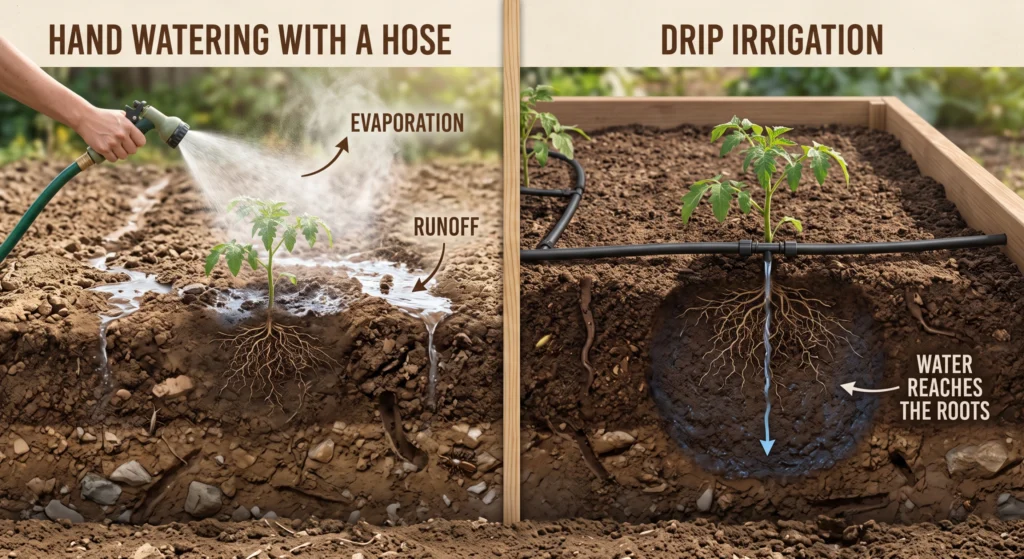
There is no point in naming a percentage here since it fluctuates depending on climatic and soil conditions as well as your watering skills. But those who have switched to the drip system have noticed that they have been spending much less time watering their plants and yet they look healthier than ever before.
The Health of Plants: The Leaf Problem
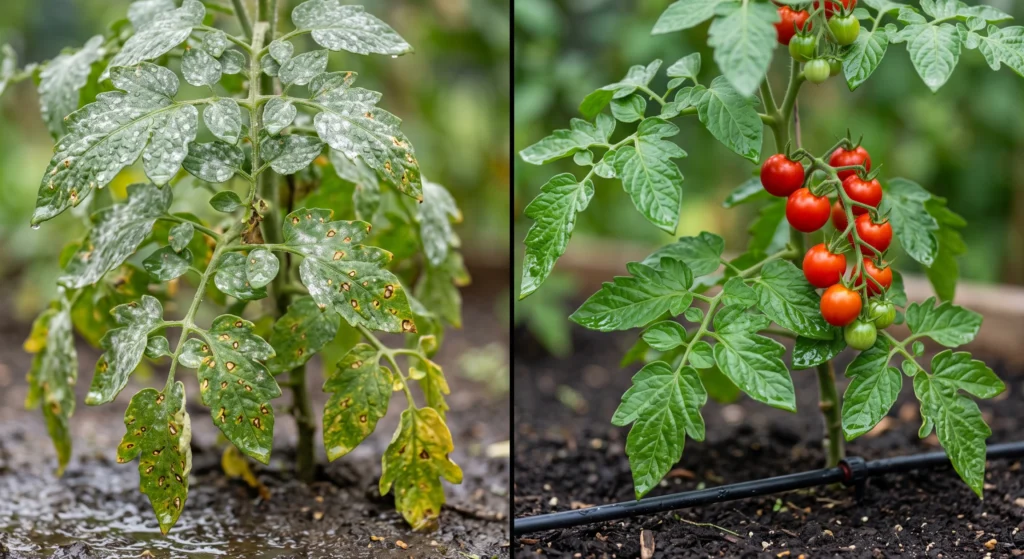
Moisture on the foliage creates problems. Diseases such as powdery mildew, blight, botrytis, and leaf spot all favor moistness on leaves, especially at night. These plants include tomatoes, squash, cucumbers, and roses. In manual watering, it is easy to wet the leaves unintentionally, especially when watering at high speeds and the water in the hose goes its own way.
With drip irrigation, there will be no moisture on the foliage. This helps in reducing the pressure of diseases during humid summers and reduces weeds because water will only reach the plants that need water. There won’t be any moistness in between the rows where plants will not germinate.
Consistency of moisture is another important issue. Moisture is favorable for the growth of most plants. Tomatoes that experience frequent drought and floods develop split fruits. Some leaf vegetables become bitter and bolt when stressed. Using drip irrigation at regular intervals eliminates this problem. The excitement of Tuesday and tiredness of Thursday will not be influencing watering.
Time and Effort
Watering manually in a small garden is a task that will require 15 minutes of your time. In a bigger garden, watering takes about an hour, and in the summer season, it must be done daily. This amounts to a considerable portion of your time during the week, and it becomes the first thing that is dropped whenever life becomes hectic. You come back from vacation and find wilted beans waiting for you.
This problem is solved easily by adding a timer to your hose end. Just set it, check to see if it is still working every once in a while, and leave the job to yourself. Vacation is not a problem anymore where you must beg someone from your neighborhood to help you out.
There is, however, a price. Drip system requires an afternoon the first time, and more if your beds are irregularly shaped. This is natural since no one gets it right from the first time. The most common mistake among gardeners that forces them to go back to the store is having fittings that don’t fit.
Cost: The Real Costs, Without the Fictional Ones
An irrigation hose and a decent nozzle aren’t expensive. A watering can is not even more expensive. Hand watering takes the prize on day one.
The initial costs of a small drip system for one raised bed or row garden are reasonable and about the same amount as your dinner out with friends, while bigger systems cost proportionally more. But you will need to buy a timer if you wish to have this convenience, and replacement parts now and then. The emitters clog, the tubes get chewed by squirrels, and the cheap plastic deteriorates under exposure to the sun.
In the long run, the drips often win the price competition due to reduced water usage and saving many hours in the long term. However, if all you have are a few containers on a patio or a balcony, the break-even point comes far into the future, if at all.
When Hand Watering is More Appropriate
It would be doing you an injustice to suggest that drip irrigation is always better. Sometimes hand watering works out better than drip irrigation does.
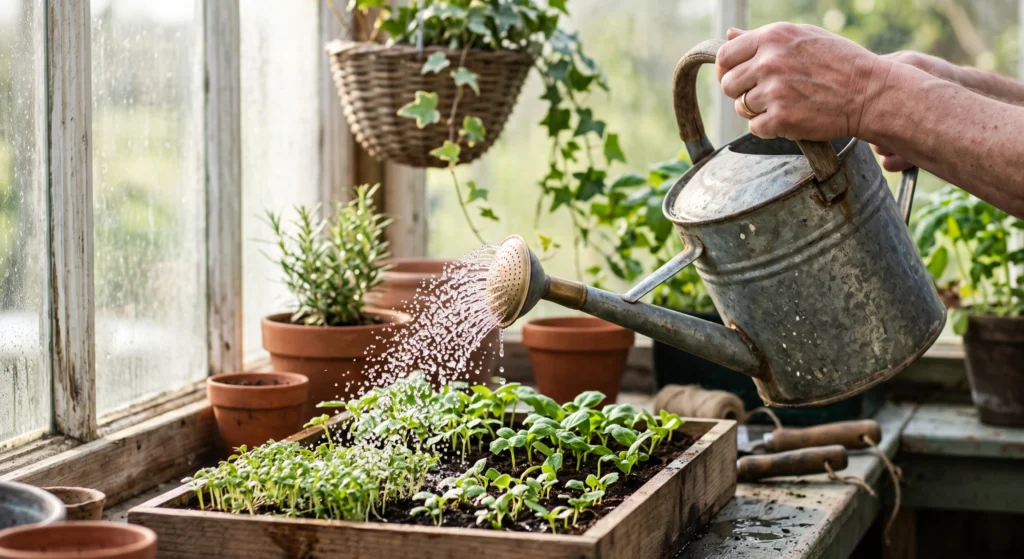
Seedlings/transplants. The delicate nature of their roots requires water application that drip may not achieve because of the spacing of the emitters. This is where a watering can with a rose attachment is recommended.
Planters/hanging baskets. These plants dry up quickly; moreover, they are all over the place and setting up tubes to them is difficult. Some people have applied drip irrigation in planters successfully, but a can check on them can do better most times.
Limited/unusual spaces. If your garden comprises only pots and a few herbs, then hand watering allows you to relate better with them.
Identifying problems. Hand watering requires walking through the garden which helps you observe everything. Aphids, chewed leaves, and sulky peppers are seen, while a timer cannot detect these things.
It’s an interesting one to think about too. Even seasoned gardeners use dripper systems and still go for that leisurely stroll in the garden every morning with a cup of coffee in their hands. The pipes do the watering, but the stroll keeps the gardener alert.
An Easy Method to Figure It Out
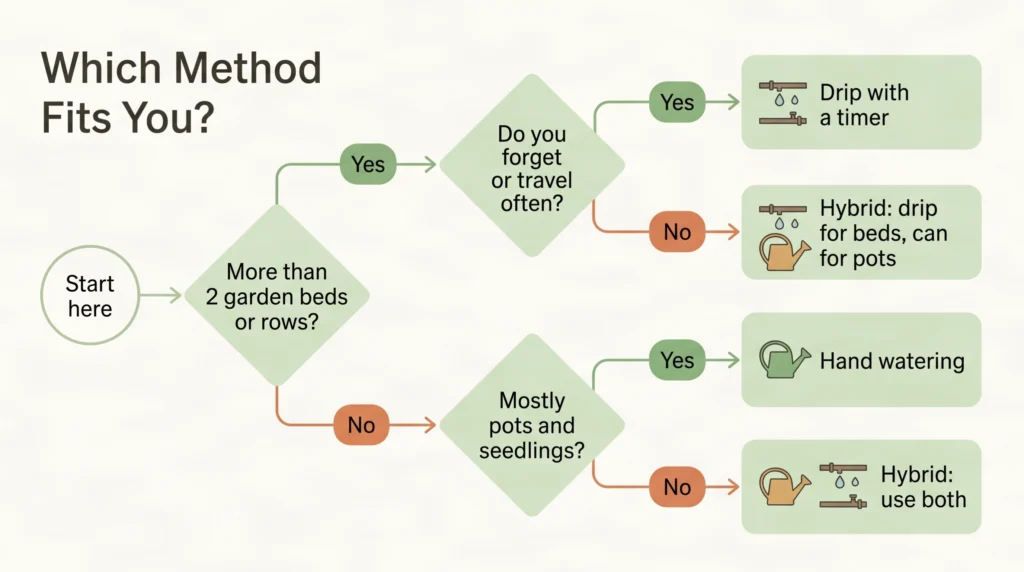
Consider some straightforward queries.
How large is the garden? Drip will become more economical once you start working with several garden beds.
How trustworthy are you? No shame, just be honest. If you tend to forget things in August, consider automation.
What are you planning to plant? Almost all vegetables in the beds and tomato plants will flourish when using drip irrigation system. Potting and starting seeds prefer hand watering.
Is water expensive or limited in your area? In arid regions or those places where there are watering limitations, you will find yourself better off choosing drip.
Many people go for a hybrid solution , installing drip to the beds and shrubs while keeping the watering can for seedlings, pots and hanging baskets.
Beginning With Drip and Keeping It Simple
For those considering a switch, keep the first project small. Choose one raised bed or one row and make sure it works well before scaling up.
Start by drawing the bed and its measurements. Next, buy a kit that fits your region and verify that it contains a filter and a pressure regulator, as most taps provide too much pressure for drip tubes to withstand. Place the mainline tube, attach the emitters to the base of each plant, flush the tubes prior to capping them, turn it on, and watch for leaks. Make adjustments as needed and cover everything with mulch to retain moisture.
Test it for an entire week before trusting it. Take a shovel and dig a few inches deep beside a plant to see if the soil is wet at the root level. This single step will tell you more than a manual ever would.
Frequent Questions
Is drip irrigation worthwhile for a tiny vegetable garden?
Typically, yes, provided that you grow vegetables in beds or rows. The cost of a little drip irrigation system is not too high and saves you much time in summer. But if your entire garden fits on a balcony, hand watering will be sufficient.
How often do I need to operate drip irrigation?
That depends on soil, emitter design, and climate conditions. Sandy soil drains quickly and requires more frequent but shorter sessions, whereas clay retains water and works best with longer but less frequent watering sessions. Begin with a moderate watering session, monitor soil condition after that and then adjust.
Is it possible to use drip irrigation in containers?
Yes, with individual emitters or spray stakes on a timer. Drip irrigation is great for a row of pots. However, for a variety of small containers in different locations, it is more convenient to use a watering can.
Is drip irrigation prone to clogging?
Yes, especially when you have hard water or contaminated water source. It helps to install a filter, and flush irrigation line at the beginning of each growing season.
Summary of My Thoughts
In case you’re gardening using raised beds, and have a slight habit of being busy, then put in the drip irrigation. This way your plants will be more reliable, and your summer will not have much connection with the hose. In case your garden consists of mainly seedlings and pots or is only a doormat sized plot, then go on with the watering can.
And whichever way you choose to go, continue walking your garden. Your plants will reveal what they need when you’re close enough to listen.