How Often Do You Need to Water Plants in Pots? Forget About the Days of the Week
Everyone wants a figure. Three days, one week, two weeks during the summer. Yeah, I understand you, but the reality…
 By Plant Calculator Editorial Team
10 min read
On this page
Everyone wants a figure. Three days, one week, two weeks during the summer. Yeah, I understand you, but the reality of how often you need to water plants in pots is that it depends, and you’ll be less likely to kill any plant as long as you admit it.
The best thing is that “it depends” doesn’t mean anything. Just a few factors determine how dry a pot gets, and knowing what those are will help you figure out everything else. This post explains.
Reason why watering by a schedule does not work
First, a schedule presupposes that all the days are equal. They are not. While a pot on a sunny balcony will dry up in a day and a half in July, it will stay wet for ten days in October in dull weather. With such a plan in mind, you will either drown your plants one week or starve them the next one.
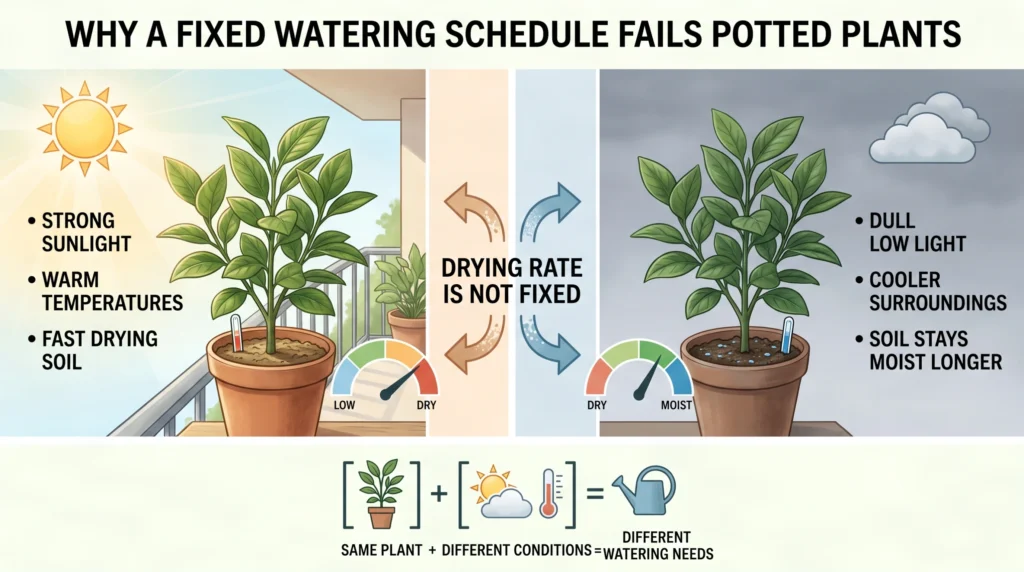
This is exactly what happened with my perfectly healthy peace lily. I had a tiny reminder on my phone every Saturday. And I used to follow it religiously during the gray winter months. My plant did not look happy; the leaves got yellow and the roots rotted into some nasty substance. My reminder killed it. The plant did not need help until then.
So, try to see a schedule as an approximate assumption. What really counts is the rate of drying of the soil.
What makes pots dry faster?
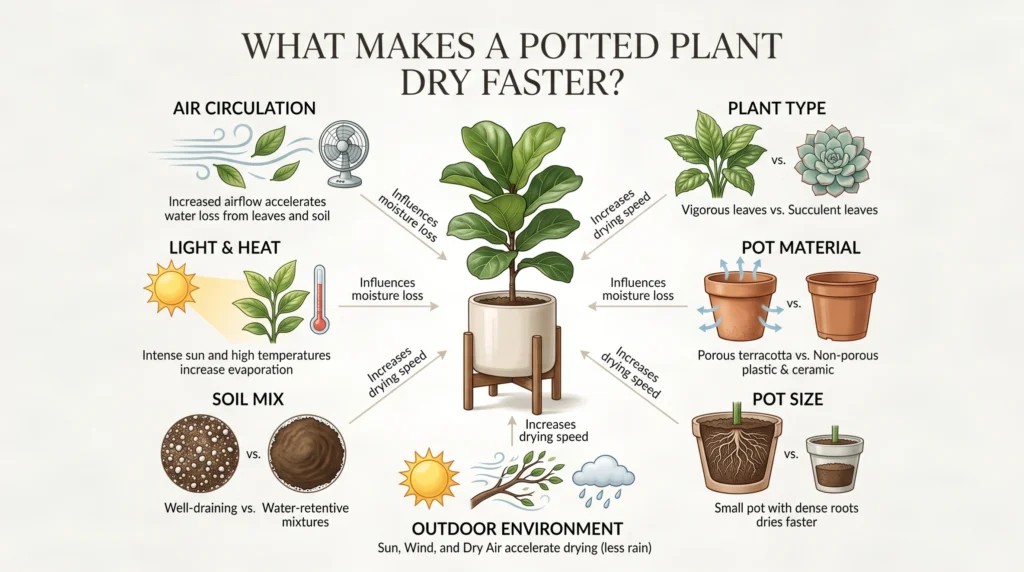
To figure out how frequently you should be watering, it is good to understand what causes some pots to dry in just two days, while other pots take up to two weeks to dry out.
The actual plant
The succulents, cacti, snake plants and the ZZ plants have water stored in either of the leaves or roots so that they are okay with staying dry for quite some time. The ferns, the calatheas and the tropical leafy plants love staying wet and they’ll notify you immediately of this need. The herbs such as basil are dramatic where water is concerned. The rosemary and the thyme would prefer being forgotten.
There are those big leafy plants which take in water easily because of the larger surface area from which the water is lost. The small pothos and the big fiddle-leaf fig do not share a similar watering routine.
The choice of pot material and size
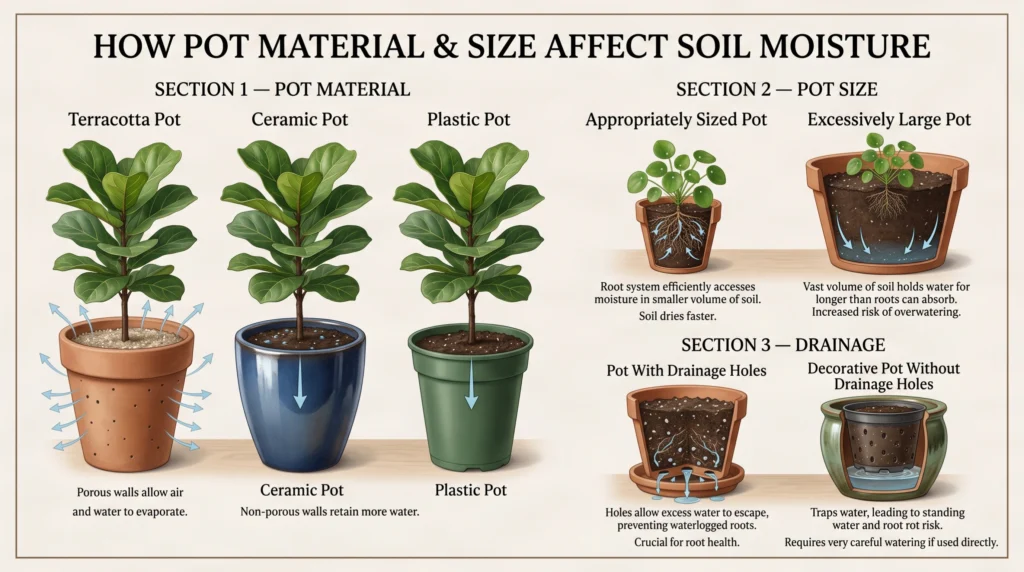
It is very often underestimated. Terracotta is porous and water passes through its walls to evaporate. Terracotta pots dry out faster. Ceramic and plastic do not allow the water to pass and remain moist for a long time. It may be that reason why your friend’s plants grow well using terracotta and your plants wilt under the same conditions.
The size of the pot is important as well. The rule is that there should be no space between the plant and the pot wall. If the plant is small and the pot is huge, there will be much soil for the roots and it will stay moist for a long time.
Drainage holes are essential, as well. An attractive pot that does not have drainage holes on its bottom is just a bowl; and, obviously, plants will never survive in such a bowl full of water. If you like this pot, place your plant in a less attractive and much cheaper pot with drainage holes inside the former.
Soil mix
Pure potting soil retains much moisture in it. With perlite, rough sand or bark added, drainage is improved, and this is precisely what cacti and orchids require. A heavy and peaty mix in shade retains moisture seemingly forever. Whenever you continue to struggle with wet soil in pots, this is usually the silent cause.
Light, heat and air circulation
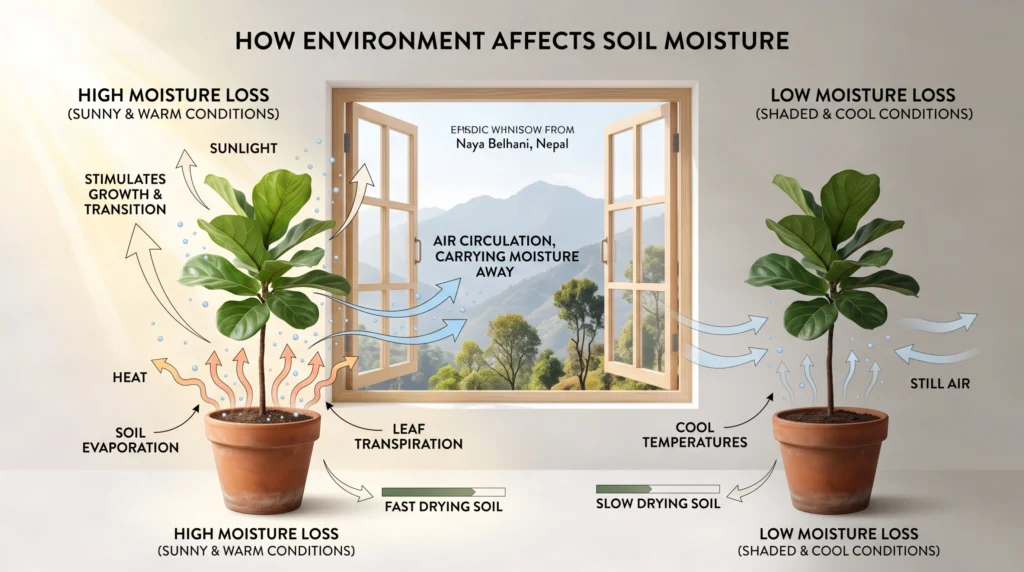
More light equals more growing equals more water needed. Heat and air circulation remove moisture from the soil and plant leaves. Pots near windowsills receiving southern exposure, vents blowing hot air or open doors in winter lose moisture significantly faster than shaded ones. Winter is slow season for most indoor plants as light levels and growing speed decrease; thus, they need much less water in winter compared to summer months.
Inside vs. outside
Outdoor pots play by their own set of rules. The sun, the wind and the rain all get to weigh in. During a heat wave, a pot out on your deck may have to be watered every day, even morning and night, if it’s small enough. Hanging baskets are the most thirsty of all since they get the sun from all sides. But a few good rains could do the job for you.
Determining whether a plant really needs water
Stop looking at the calendar, reach for your hands, and do what works. Here are the techniques that I use and recommend, from most to least frequent.
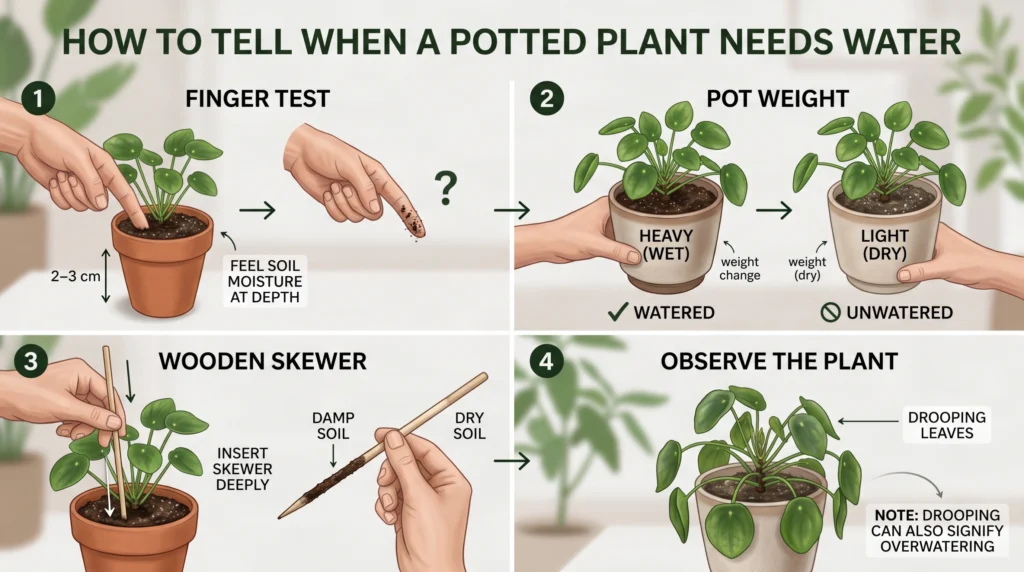
Finger test. Stick your finger into the soil to the first knuckle, two or three centimeters deep. If it feels damp, wait; if not, water. Low-tech and effective.
Weight of the pot. Learn how heavy the pot feels immediately after being well-soaked, and when dry. You will notice the difference in no time at all. If it feels light – it means the soil is dry. Works particularly well for large pots where a finger does not give an accurate reading of moisture level.
Wooden skewer or chopsticks. Stick it to the bottom of the pot and take it out. If the stick is dry, it means the entire pot is dry. If damp soil is sticking to the skewer – don’t water yet. Effective, inexpensive, and eliminates lots of guesswork.
Watch the plant. The telltale signs of droopy leaves may signal either lack of water or an excess of water, which is really frustrating. This is why it is important to examine the soil before jumping to any conclusions. If the soil is dry, then your plants lack water; if the soil is moist, then something else is wrong with them.
Plant types rough guide
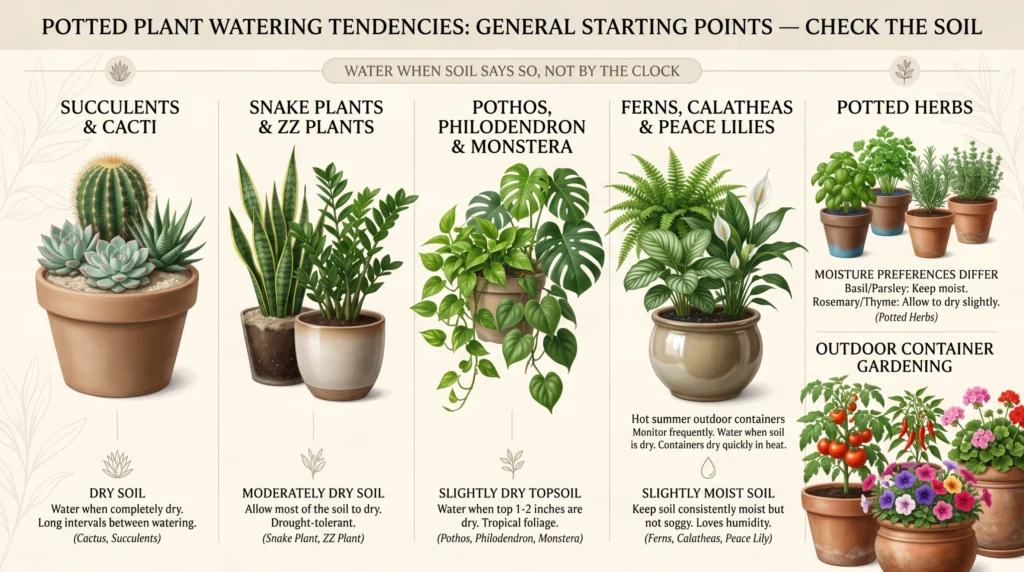
Now, as I said, I won’t give you a specific figure. But the following ranges will get you started. Think of them as a starting point, but take the soil’s word for it.
- Succulents, Cacti: Allow soil to completely dry before watering again. Indoors, this will usually be every two to three weeks during growing season, and less frequently in winter.
- Snake Plants, ZZ Plants: Quite hardy. Water roughly every two to four weeks, depending on light levels. They are killed by being overwatered.
- Pothos, Philodendron, Monstera: Water when the top few centimeters of soil feel dry. This will usually be roughly weekly, less frequently in winter.
- Ferns, Calatheas, Peace Lilies: Like soil that is always slightly moist but never wet. Check roughly every few days.
- Potted Herbs: Basil and Parsley like moist soil consistently. Rosemary, Thyme and Oregano need soil to dry between waterings.
- Outdoor Summer Containers (Flowers and Vegetables): Typically daily in the heat of summer, and especially so in small containers. Potted tomatoes are famously thirsty when they start fruiting.
Should the type of plants that you have not be mentioned in the list, you should consider the natural habitat of the plants. Plants from a forest floor will require something completely different from those plants coming from the desert.
How to water correctly (just as important as how frequently)
Timing is emphasized a lot but technique is often overlooked.
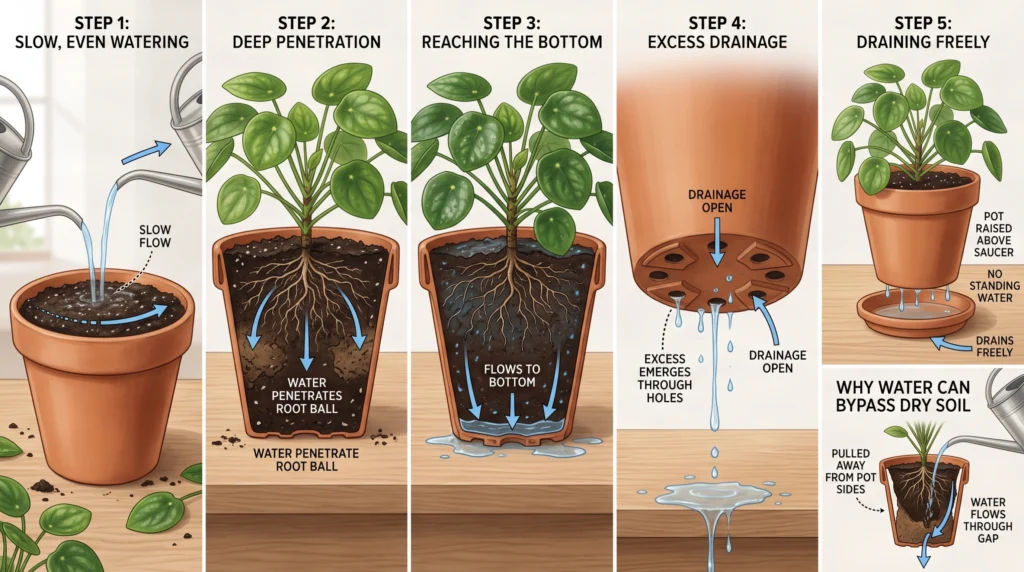
Water thoroughly and less frequently. Drenching the soil only at its surface leads to moist soil above and dry soil below and forces roots to remain at the top level. To ensure watering of the entire root ball, water the pot until you see it coming out through the drainage holes.
And then allow draining. Leave the pot sitting in a saucer filled with water for several hours because standing water in the pot causes roots to rot very quickly.
One last thing to remember: when the potting mix has dried out so much that it has pulled away from the edges of the pot, water will flow through the empty space and out of the bottom without moistening the soil. In such cases, place the entire pot into a pan filled with water for half an hour.
Indicators that you have overwatered and underwatered
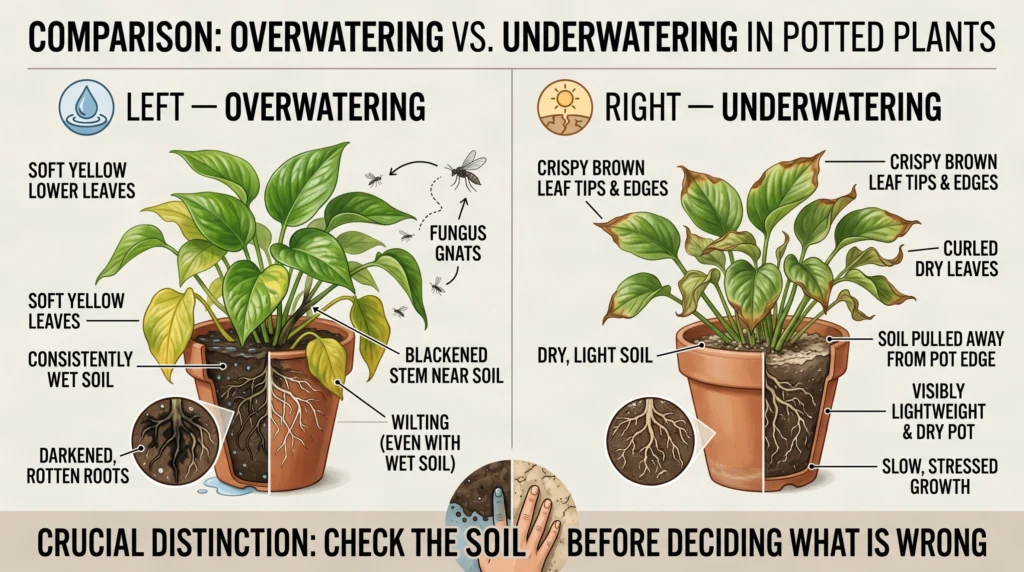
The two situations have somewhat similar appearances, and that is why most people confuse them. Below is how one can distinguish between the two.
If your plants have:
- Yellow lower leaves that are soft and moist
- Soil that remains wet for several days and has an unpleasant smell
- Black and rotten stems at the base
- Gnats around the plant
- A wilting plant despite moist soil
Then your plants are most probably overwatered.
If your plants have:
- Crispy tips or leaf edges
- Leaves that have curled up and dried up
- Soil that has pulled away from the pot edge
- A very light pot
- Slow growth
Should you suspect over-watering, discontinue watering, move the pot to a more open spot that receives adequate air flow and sunlight, and allow the pot to dry thoroughly. Should the problem be grave, remove the plant from its pot and cut off all blackened or rotting roots and transplant into new soil.
Seasonal adjustments
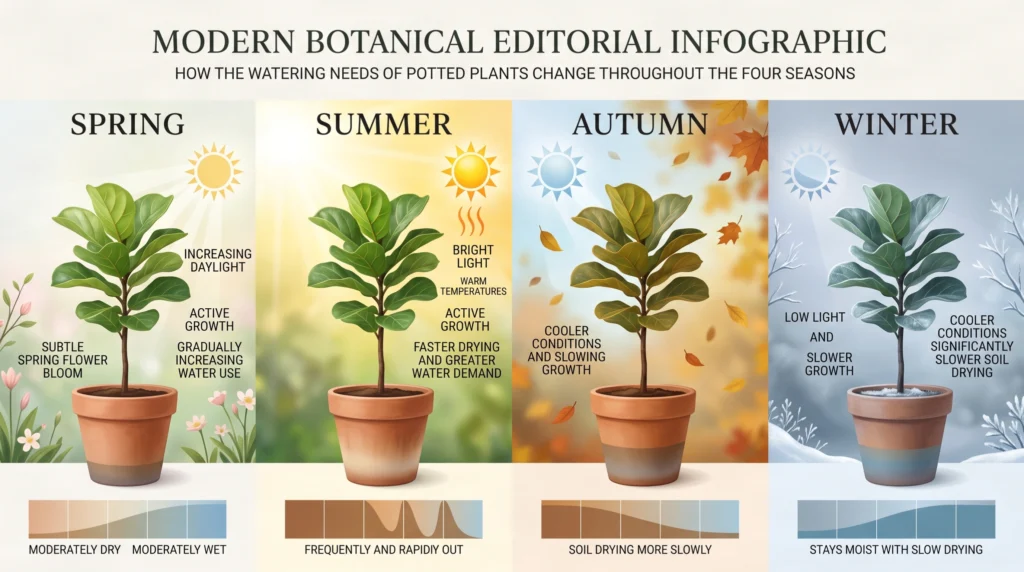
This is where I wish someone had pounded the point home. Your watering schedule should change throughout the year.
During spring and summer, plants will be growing and using more water, meaning you’ll need to water more frequently. During fall and winter, plants won’t be growing as much and the soil will take longer to dry. If you keep up the watering schedule from the summer months, then you will end up with overly moist soil come January.
One useful method of watering is checking on your plants on the same day each week but only watering those that need it. This lets you have the structure of a schedule while allowing yourself to make sure your plants need to be watered. Some weeks you’ll need to water half your plants, while other weeks you’ll water none.
Frequently Asked Questions
Which is preferable, underwatering or overwatering potted plants?
If one must make a mistake, it’s preferable to err on the side of being dry. Plants tolerate a bit of dryness much better than overly wet conditions where their roots may rot. A dehydrated plant usually perks up quickly after being given some water. It’s very difficult to revive a plant that has had its roots rot.
Should potted plants be watered every day?
Almost never, for indoor plants. Some outdoor containers do require daily watering depending on the weather; however, smaller pots and baskets may need daily watering during hot weather.
Top-watering versus bottom-watering plants?
Both are equally effective. Top-watering is simpler since it allows the removal of excess minerals. In cases where the soil has turned hydrophobic and dry, bottom watering can help greatly.
The best habit surpasses any schedule
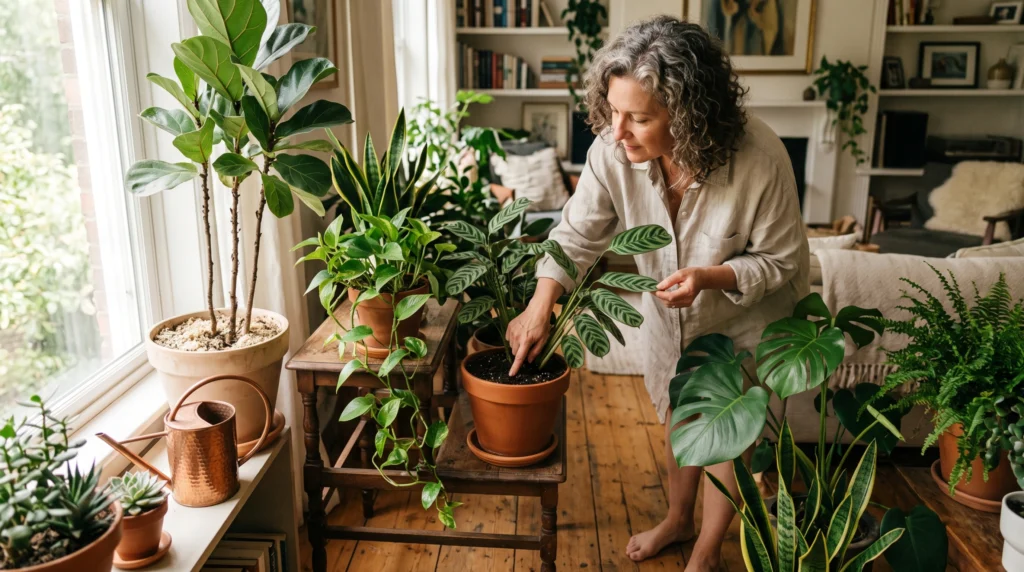
But even if there’s only one thing to learn from all of this, it should be the finger trick. Before watering, stick your finger into the dirt. It takes five seconds, but it will save more plants than any app, graph, or reminder.
Pay attention to how your personal planters behave. Observe which dry up quickly, which stay moist for longer periods, and which plant loses its leaves before others in case of thirstiness. Within a month or two, you won’t need any schedules anymore. You’ll simply approach a plant, look at it, and decide on its condition.
And if, along the way, you manage to kill one, no need to feel bad about it. Everyone has a peace lily story.