Is It Overwatered or Underwatered? Decoding Your Plant’s Hidden Signals
Your plant appears unhappy. Its leaves are droopy, some may be yellowing, and you are there holding a watering can…
 By Plant Calculator Editorial Team
10 min read
On this page
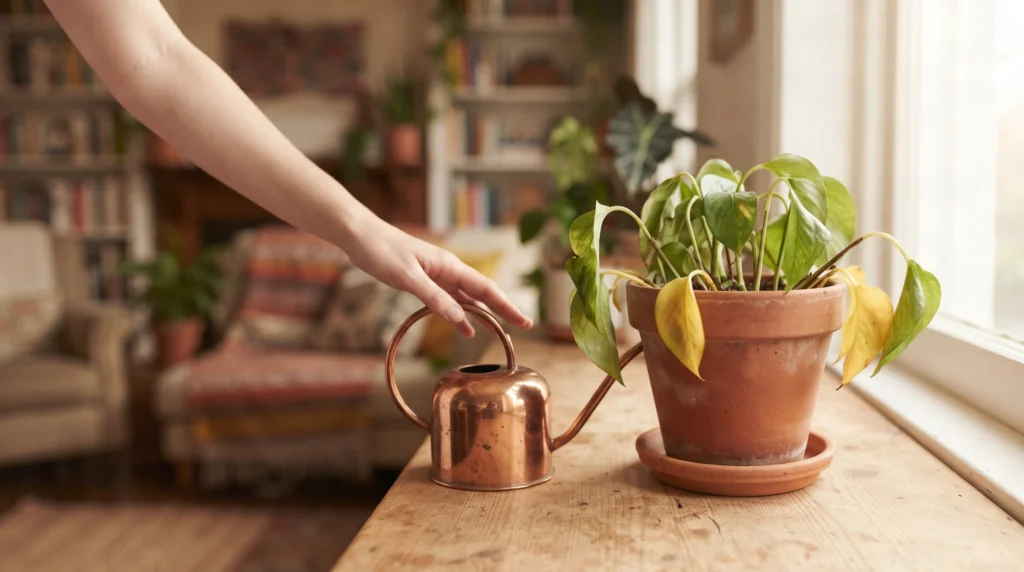
Your plant appears unhappy. Its leaves are droopy, some may be yellowing, and you are there holding a watering can and are wondering whether you should water or not. The frustrating thing is that a plant that is dying of thirst will look quite similar to one that is being drowned at first sight. Both are wilting; both are shedding their leaves; both leave you feeling guilty.
The good thing is that there are distinct features which differentiate between the two, and all it takes is about thirty seconds to identify. Let’s find out what you really have here.
The Similarity between the Two Issues
The first thing that sounds paradoxical is that overwatering leads to plant wilting since the latter results from dehydration. Plants have to get air, and in case when their roots cannot reach oxygen due to excessive moisture of the soil they start rotting and as such lose their ability to absorb water. Therefore, a plant wilts since its roots are rotting even if there is plenty of water around.
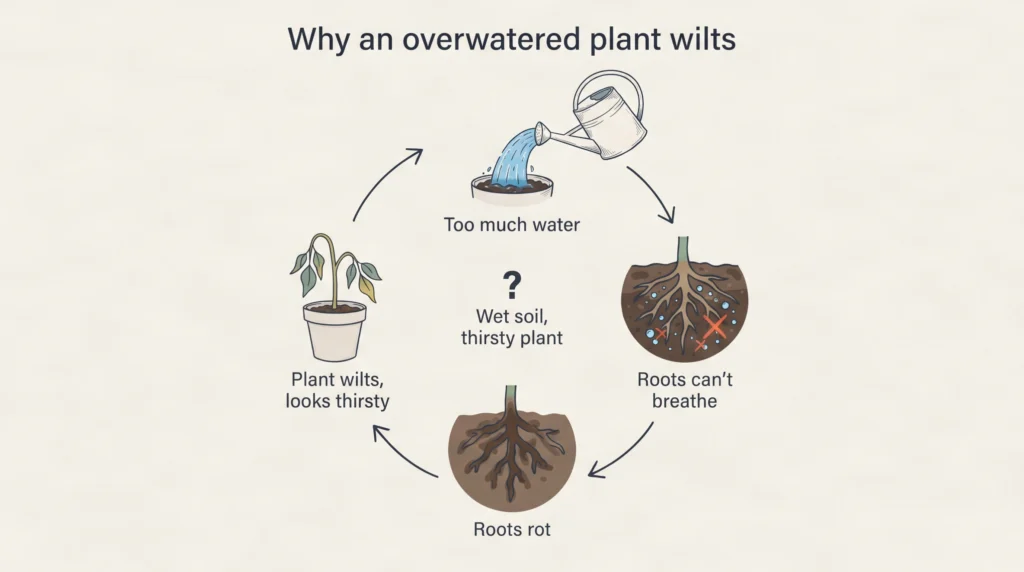
And here is the trap. It may be tempting to assume that any wilting plant requires watering, but this way one makes the problem even worse. This is exactly what I did several times with a peace lily of mine which suddenly started wilting. I watered it , it started wilting even more and I watered it again. The result is clear.
Hence, the rule is quite easy, never water a wilting plant until you checked the condition of the soil.
Indicators That You’re Overwatering Your Plant
Overwatering your plant is far more likely than underwatering. This is partly due to the fact that we are all good-natured folk who want to help our plants.
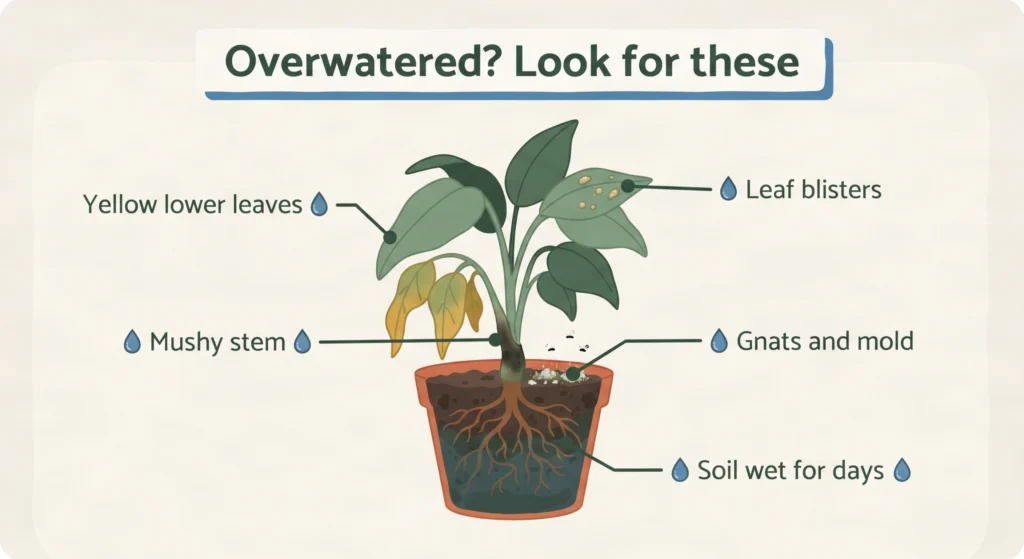
Yellowness of the leaves, particularly those at the bottom
It is very common for yellowing to begin with the older leaves at the bottom and to spread upwards. The leaves feel more soft than crisp. It becomes clear that there is a problem when the leaves can be pulled off the plant easily.
Soil that remains wet for several days
You can check to see if your plant is absorbing water efficiently by pressing your finger into the soil. If the soil is still damp several days after the last time you watered the plant, then the water is not being absorbed quickly enough.
Squishy stems and brown, mushy areas
A firm stem is good. If your stem feels squishy at the base, that is a sign of rot and that is bad. Brown areas that are soft and wet, rather than dry and papery, are also an indication of overwatering.
Fungus gnats and mold
All those little black flies flying around your plant as if they own the place? They lay eggs in the wet soil. That fuzzy white substance growing on the soil surface? Mold and it grows in moist conditions. Neither will harm your plant, but it is a clear indicator of your plant being kept too wet.
Edema
Certain plants, including Ivy and some succulents, develop blisters on their leaves in response to taking up water faster than they can use it. It looks weird and a lot of people think it is caused by pests.
Symptoms of Underwatered Plants
Generally speaking, underwatering is more noticeable and also much easier to remedy.
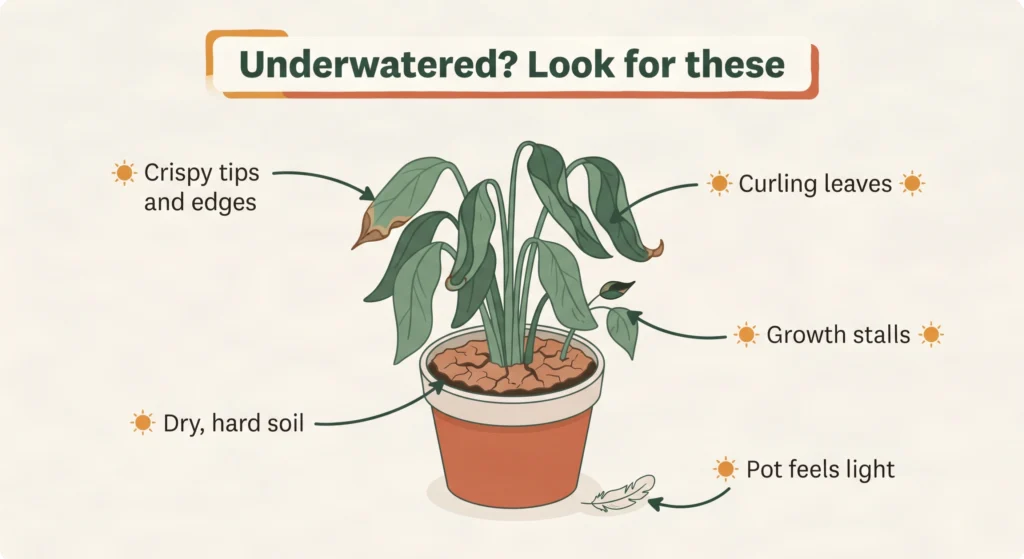
Brown and crispy leaf edges and tips
If the plant lacks water, its leaves start to die from the very outermost points first because it’s the farthest area from the roots. Unlike with overwatering when the leaves become brown and mushy, underwatering leaves will feel crisp and dry.
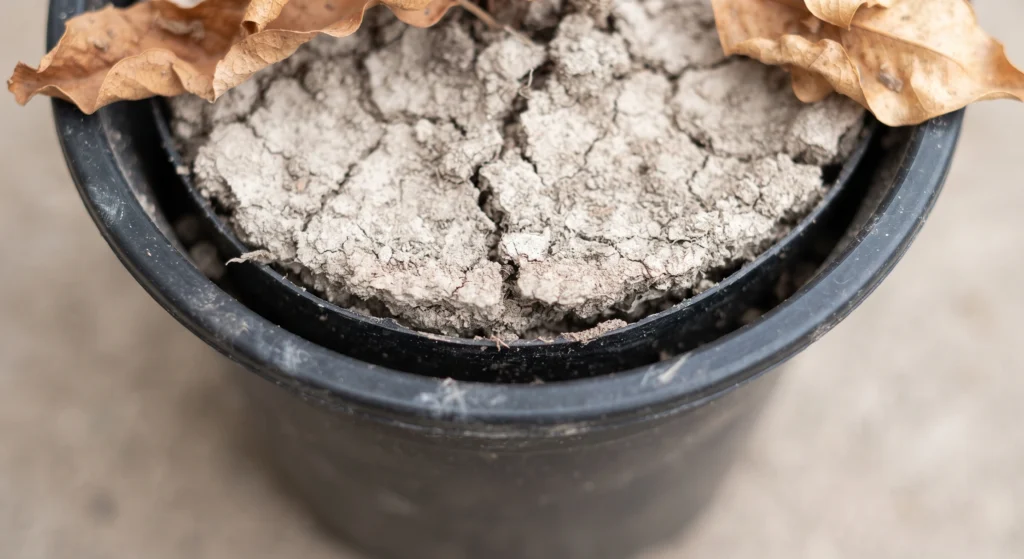
Dry soil that moves away from the pot’s sides
The next thing to do is look at the sides of your pot. If the soil has moved away from them, then you know that the plant was underwatered for some time. Drying potting soil becomes hydrophobic, which means that water just goes through the soil without getting absorbed by it. This is especially true for peat-based soils.
Perking up after getting a drink
And here’s the best test in the entire article. When the plant wilts and then perks up again after getting a drink, the plant was just thirsty. If a plant wilts and doesn’t perk up after getting a drink, there must be some other reason, and rot is a likely candidate.
Poor growth and curled leaves
The curling or folding of leaves could be an effort to minimize their surface area and retain moisture. Also, growth stops. Your fern has been growing new fronds every two weeks or so, but suddenly stopped growing for two months. What’s in the pot?
Light and papery pot
Lift the pot. A dried pot is lighter than when the pot is fresh from watering. This test will become your best friend once you get familiar with it, and I’ll refer to it again later in the article.
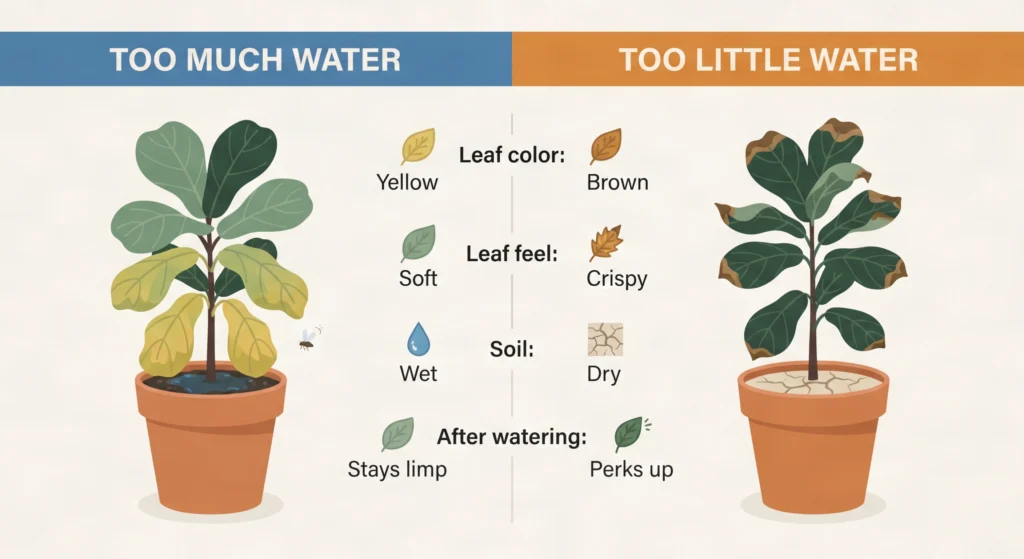
Overwatering Versus Underwatering Compared
Comparison can sometimes be the key.
| What you notice | Likely overwatered | Likely underwatered |
|---|---|---|
| Leaf color | Yellow, often starting low on the plant | Brown, dry edges and tips |
| Leaf texture | Soft, limp, or mushy | Crispy, brittle, or curled |
| Soil | Wet or damp for days, may smell sour | Dry and hard, may pull from the pot edge |
| Stem base | Squishy or dark | Firm, though the plant looks wilted |
| Pests | Fungus gnats, mold on soil | Spider mites are more common in dry conditions |
| After watering | Stays limp or gets worse | Perks up within hours |
Not a single clue guarantees over or underwatering. Two or three clues should be noticed for the proper conclusion.
How to Check Correctly (and Not Just Make Guesses)
Looking at leaves gives you hints. Checking the root ball gives you facts. Here are the ways I actually believe in.
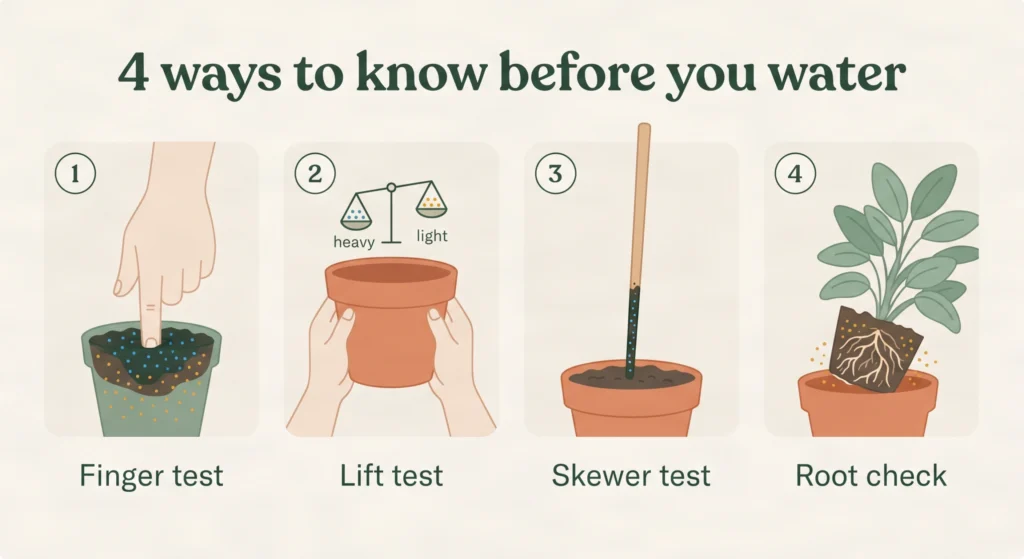
The finger method. Insert your finger to a depth of two inches (or up to the second knuckle) into the soil. Most tropical houseplants need the soil to become a little dry before watering them. Succulents and cacti prefer it totally dried. Ferns and calatheas, that like moist soil, should be watered when soil gets just slightly damp.
The lift method. Learn how heavy is the pot after watering and compare it with its weight a few days later. You’ll notice the difference quite quickly. Also, it will come in handy for lifting heavy pots.
A skewer made of wood. Insert it in the bottom of the pot and withdraw it from there. The presence of dark, moist soil in it indicates that water is still present there. The absence of such soil indicates that the pot has dried completely. It is especially helpful for deep pots when the top seems dry and the bottom remains moist.
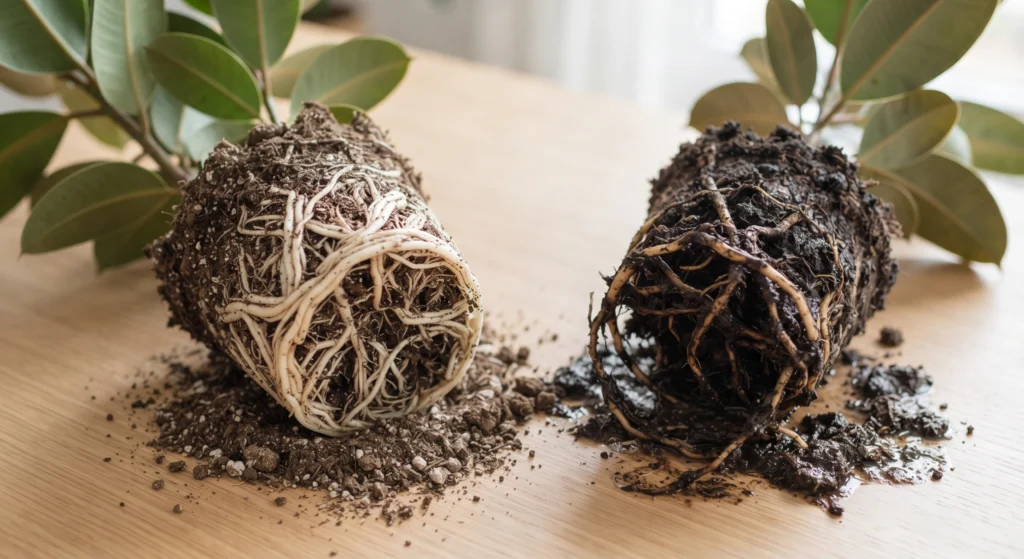
Checking the roots. If you are absolutely not sure, then remove the plant from its pot. Good roots have a firm appearance and they appear white or light tan in color. Rotten roots appear brown or black in color and become mushy as well as having a foul odor.
What to Do if You Overwater Your Plant
Do not panic, and do not water again in an attempt to flush it out.
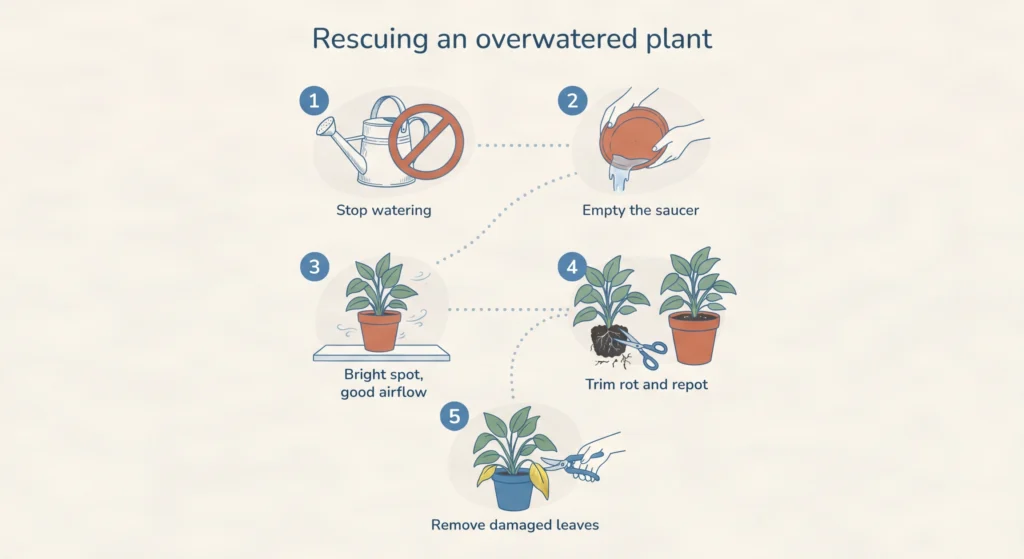
- Don’t water the plant anymore, and place it in a sunny place but without direct rays with plenty of air circulation.
- Look into the drainage holes. Having water in a saucer or decorative cache-pot will make the roots moist. Drain it.
- In case the soil is only slightly moist, wait for it to dry completely before you give it another drink.
- In case there’s too much water in the pot or you think the roots have rotted, take the plant out of the pot. Gently shake away the wet soil, cut off the black and soft roots using disinfected scissors, and replant the plant into the fresh soil with drainage holes in a new pot. Water lightly after the process.
- Remove badly damaged leaves so the plant doesn’t waste energy on them.
Some plants recover quite quickly, others need several weeks to produce new growth. Just be patient. Fussing around the recovering plant will cause you to overwater it once again.
What To Do When Your Plants Are Underwatered
Luckily, it’s quite difficult to underwater your plants. Most will survive if the problem is detected on time.
- Thoroughly water the plant. Move the plant to the sink and water it abundantly enough that excess water starts draining from the bottom of the pot. If soil has gotten dry, then pouring some water on the surface won’t help much.
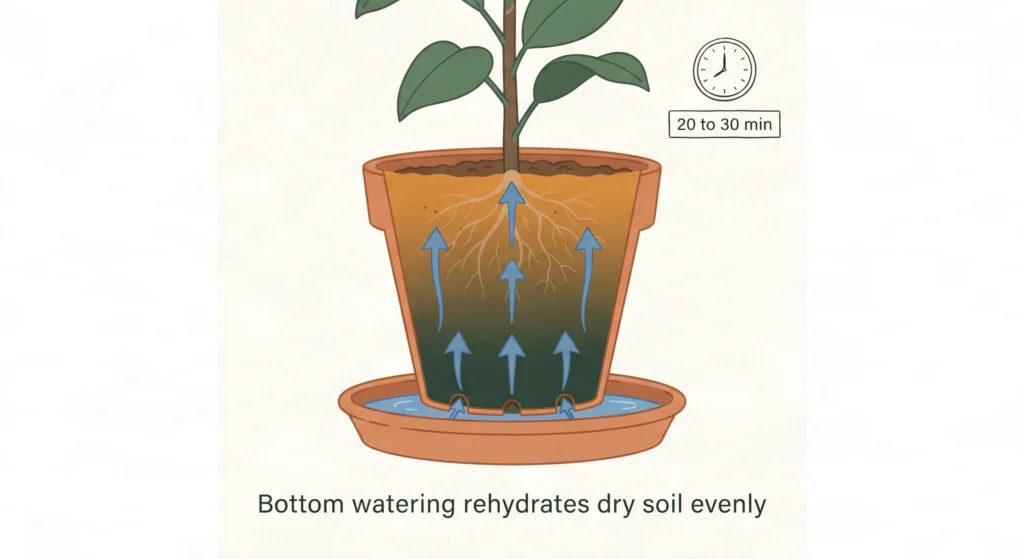
- Use the bottom-up technique when dealing with stubborn plants with hydrophobic soil. Place your plant in a container with several inches of water and leave it there for about 20-30 minutes to rehydrate properly.
- Cut away crispy leaves if they make you feel uncomfortable. However, remember that these dead parts won’t get hydrated and will have to be cut eventually, while the plant itself will recover perfectly well.
- Change your watering plan. In case your plants dried out due to the wrong routine, start using the soil check method instead.
Why Does This Continue? (And How to Prevent It)
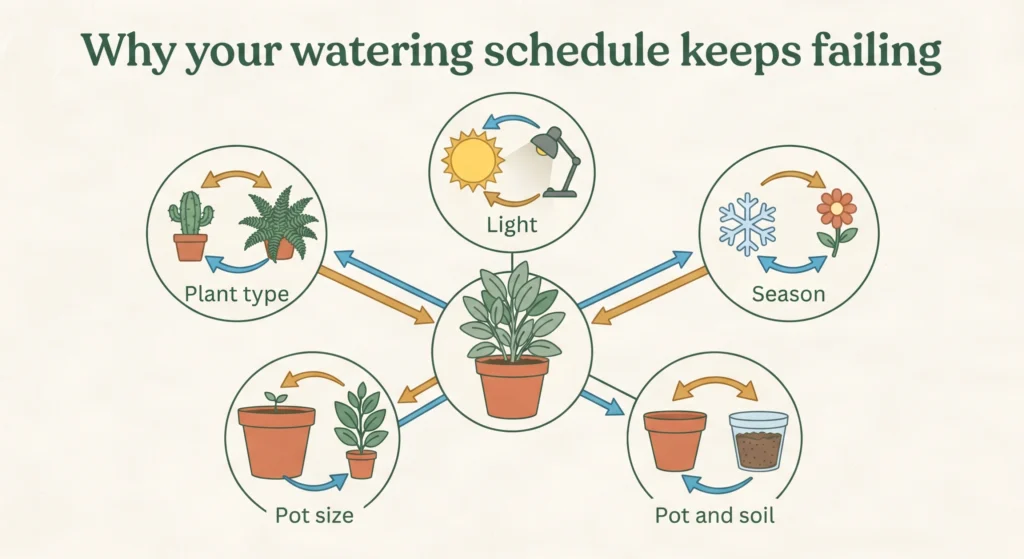
Once the diagnosis is made, it may be helpful to ask why it keeps happening. A few factors slowly alter the amount of water that your plants require.
Lighting. A plant in a sunny location uses water at a higher rate than it would in a dark spot. In low light, the soil stays wet for longer periods of time and therefore makes the plant susceptible to overwatering.
Season. Most indoor plants do not grow during winter since there are fewer hours of daylight. What worked well in July would surely kill the plant by January. For example, my rubber plant always sat there doing nothing until I decided to reduce its watering.
Container and substrate. Clay pots dry out quickly. Glazed ceramics and plastic pots keep the soil moist longer. Using a container without a hole at all times is like playing Russian roulette. Therefore, I recommend using such containers only as covers and placing the nursery pot inside it. Dense soil retains water.
Pot size. Planting a tiny seedling in an oversized pot feels like being kind to it, but it will take much longer for the water to be absorbed than necessary. Increase the pot size gradually.
Plant characteristics. Snake plants and ZZ plants need watering only weekly. Ferns and peace lilies prefer regular watering. It is better to find out what is good for your particular plant rather than try to follow one general rule which says “water once a week”. It is a good initial assumption and a bad one-size-fits-all guideline.
Quick FAQ
Can a plant be saved from overwatering?
Usually, yes, especially when the root system is not destroyed. Wait for the drying of the soil, ensure proper drainage, and remove rotten roots. When plants retain their white roots, it increases the chances of revival.
How often should I water my indoor plants?
The frequency of watering depends on multiple factors, such as plant species, size of the pot, light conditions, and season. Therefore, there is no exact answer to this question. The main criterion is the dryness of the soil.
Is overwatering always the cause of yellow leaves?
Not always. The yellow color of leaves may appear due to low illumination, a lack of nutrients, or seasonal shedding of one of the leaves.
Your Next Step
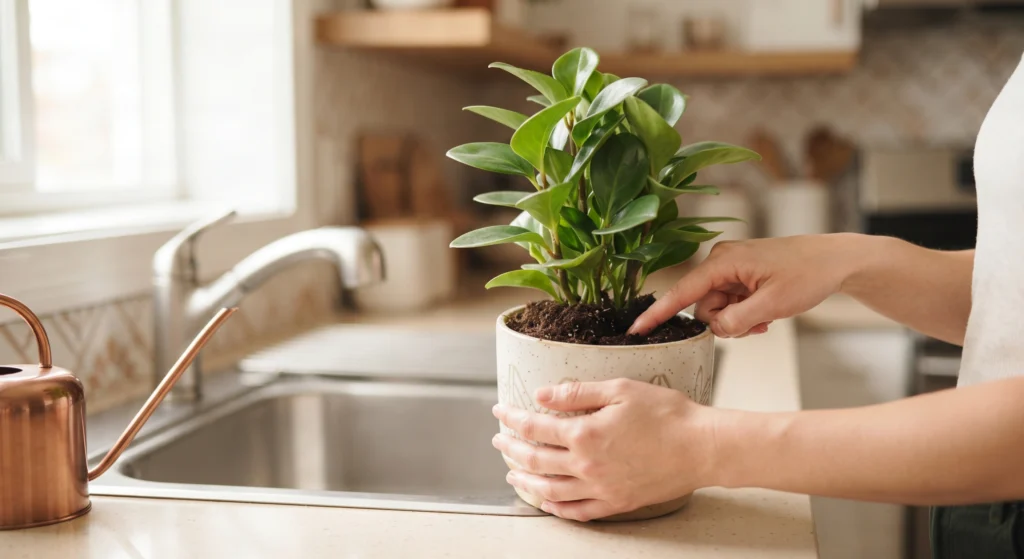
The next time your plant looks like it’s suffering, skip the watering can and pick up the pot. Weigh it, stick your finger in the soil, inspect the drain holes, and look at the foliage. This two-minute analysis will save you from all the fatal blunders that can happen with your plants.
And even if you end up killing a few plants, congratulations! You’ve joined an elite club. Everyone who has healthy plants to show for themselves always has a backyard graveyard. The only difference is that they started to listen to their soil.