Watering Your Vegetable Garden
Your vegetable garden should get around an inch of water a week, either all at once or in two big…
 By Plant Calculator Editorial Team
12 min read
On this page
Your vegetable garden should get around an inch of water a week, either all at once or in two big doses, but not daily watering. This is the basic rule. But there is more to it, depending on what kind of soil you have, what weather you experience, and which vegetables you are growing.
It is easy to damage plants with over- or under-watering; I have drowned rows of beans once in the rainy month of June, and I have seen whole beds of lettuce drying out during one week when I thought the garden would survive on its own. This guide will help you learn how to know your garden.
The one-inch rule and its origin
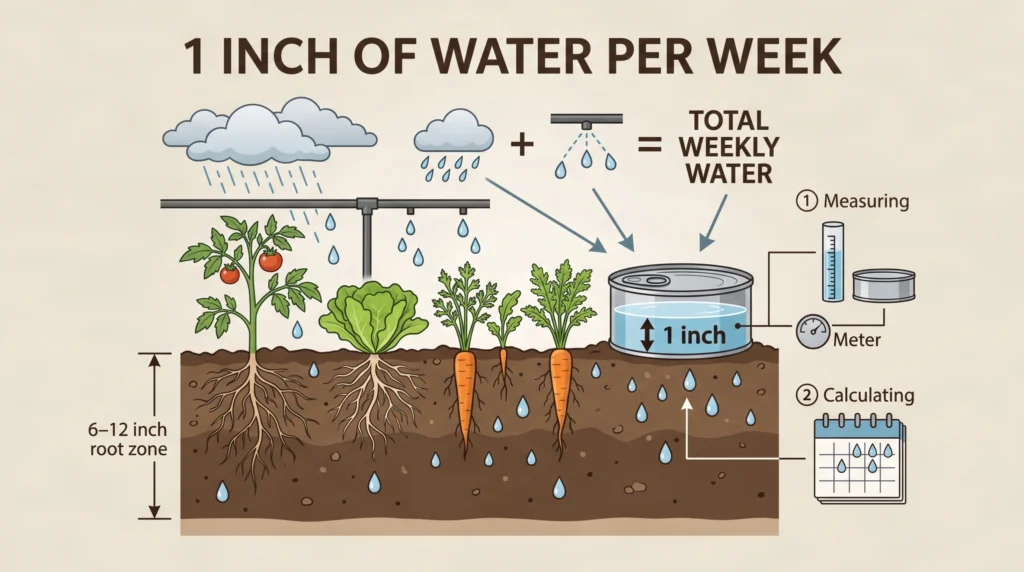
Gardeners and agricultural extension services have known that one inch of water per week, counting rainfall, was the standard amount of water for vegetables for many years now.
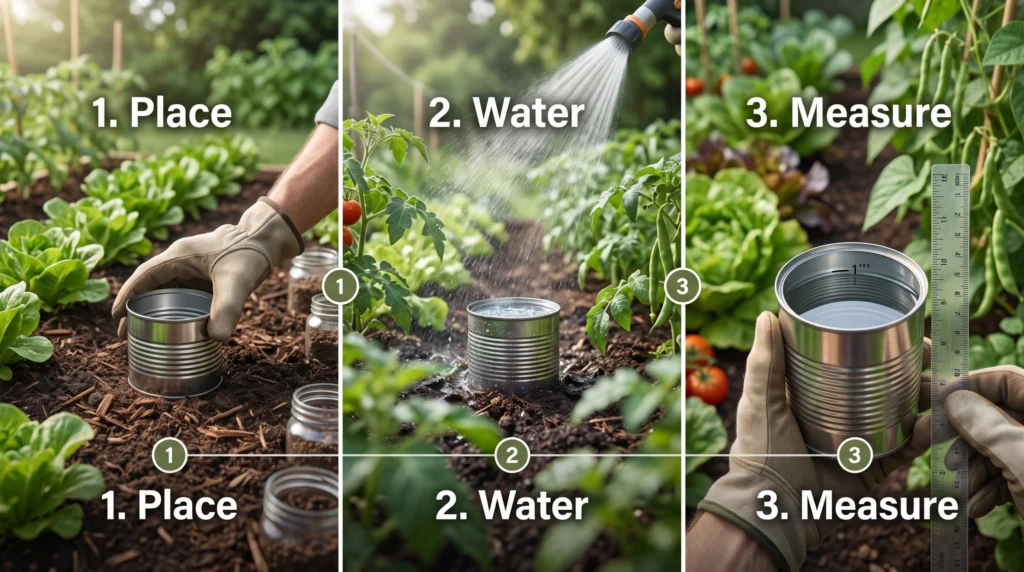
How to easily measure that amount? Put several empty tuna cans or straight-sided jars out there in your garden at the moment you begin watering and stop when they get an inch full – that way it will become clear how much water is actually needed by your vegetables in such volume.
It will be surprising, how much time it may take to get an inch of water from the hose under low pressure and how little time it may take to water with a high-pressure sprinkler. Once you do it once, you will know your system.
An inch of water penetrates to a depth of several inches into the ground. And it provides moisture at the depths of 6 to 12 inches which is required for vegetable roots.
Why a rigid schedule will not work
It feels like discipline to think, “water the garden daily at 7 a.m.” It also does not take into account the possibility that Monday may be cool and cloudy while Thursday may be very windy with a temperature of 35.
Plants do not suck water by following a strict schedule. Plants suck water depending upon the heat, sunlight, wind, humidity, and their size. In July, when the squash is full-foliated, it can take up surprising amounts of water in a day which may be quite hot. However, at the beginning of spring, when the same plant is only slightly larger than the size of your hand, it takes up much less water.
In a way, it is like creating a draft of the schedule.
The thing that will affect how often you should water your plants
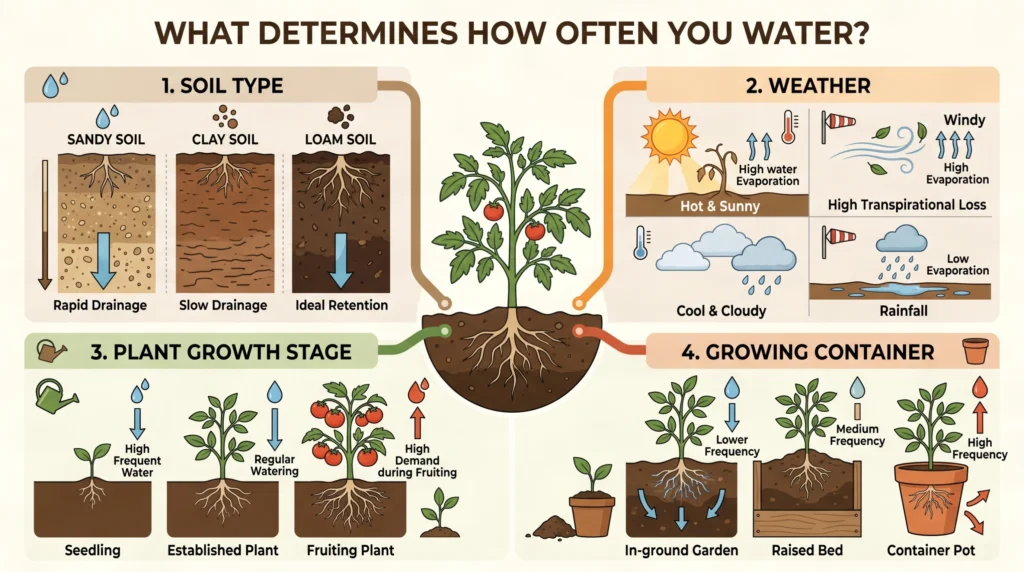
Soil type
It is the most important factor and the one that is being most overlooked.
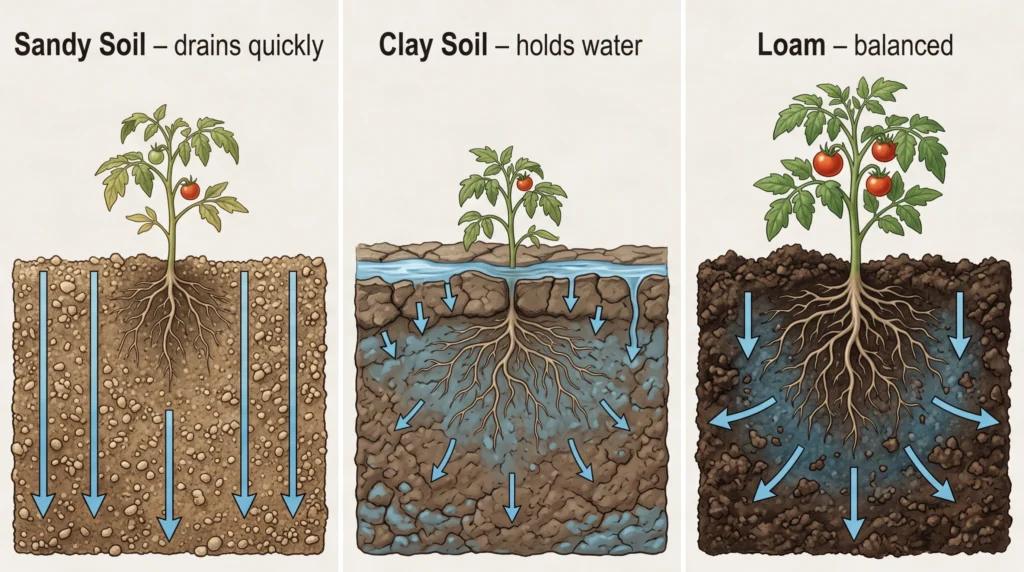
Sandy soil is quick to drain. Water passes right through it and the soil dries up very quickly. This means you may need to water the plants every couple of days during the summer season in small doses.
Clay soil retains water for a long time. It may remain moist for several days after proper watering and this means that watering is needed once a week (sometimes less during cold seasons). One thing to be careful about when using clay soil is overwatering which can deprive the plant of oxygen.
Loam is the ideal gardeners’ soil, it retains water while being well drained and watering once or twice per week should be enough.
Weather
The heat and the wind will evaporate the moisture from the soil and leaves at the same time. While there is a spell of heat and drought, you may have to water your plants twice as frequently as in spring. With cool weather conditions and rainy days, you can skip watering at all.
Rain matters, though not every rain contributes the same to the soil. The quick rain shower, which will make the ground wet within ten minutes only, won’t bring any results to your roots. The good rain, lasting several hours and soaking the ground well, is the real watering.
Plant’s current growth stage
It’s the seeds and seedlings who are needy. As their root system is small and close to the surface, the upper layer of soil must be moist until they establish themselves. Therefore, the newly planted seeds require watering either once a day or even twice on a particularly hot day until shoots appear.
Once the plant has established and the roots have gone deep enough, less frequent watering in larger quantities will be necessary. This period also marks the time when the plants become more resilient to droughts, and that is something nice for your busy schedule.
There is another stage of growth where you need to take care of the fruiting plants. The flowering and fruit set stages of growth of tomatoes, cucumbers, peppers, and squash are rather sensitive regarding moisture. Sudden fluctuations from bone dry to extremely wet soil conditions lead to problems such as cracked tomatoes and bitter cucumbers.
Raised Beds and Containers
Raised beds are better at draining than in-ground soil and also warm up faster, making them more likely to dry out. Containers represent the best case of this. In the middle of summer, your tomato plant on the sunny patio will probably need watering everyday, and possibly two times on a very hot day.
When growing in pots, make it a daily habit to check them early morning. It only takes thirty seconds but saves you from much regret.
The way vegetables use water
All plants don’t require the same care. Organizing beds according to water requirements makes things simpler, if there’s enough room.
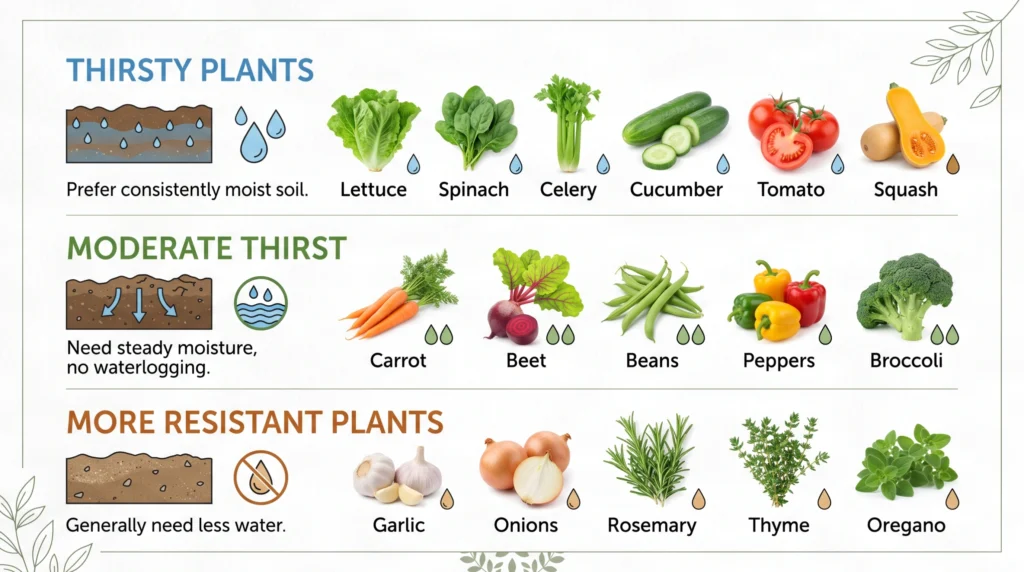
Thirsty plants
Leafy crops such as lettuce and spinach have short roots and lots of water inside them, thus requiring constant moisture in the soil. If you let them dry up, they will become bitter or bolt (produce flowers in hot weather). The same goes for celery and cucumber.
Water-thirsty plants such as tomatoes and squash need plenty of deep irrigation rather than a little water on a regular basis. They have long roots, and this is what you want to achieve.
Moderate thirst plants
Carrot, beet, beans, peppers and broccoli are moderate consumers. They require constant soil moisture but not wet soil. Carrot is especially sensitive to irregular watering because this causes splitting of its roots.
More resistant plants
Garlic and onions require less watering as their bulbs grow, and gardeners usually reduce watering to a minimum during the last few weeks before harvest. There are plenty of herbs that actually don’t like being watered, including rosemary, thyme, and oregano.
Indicators that it is time to water
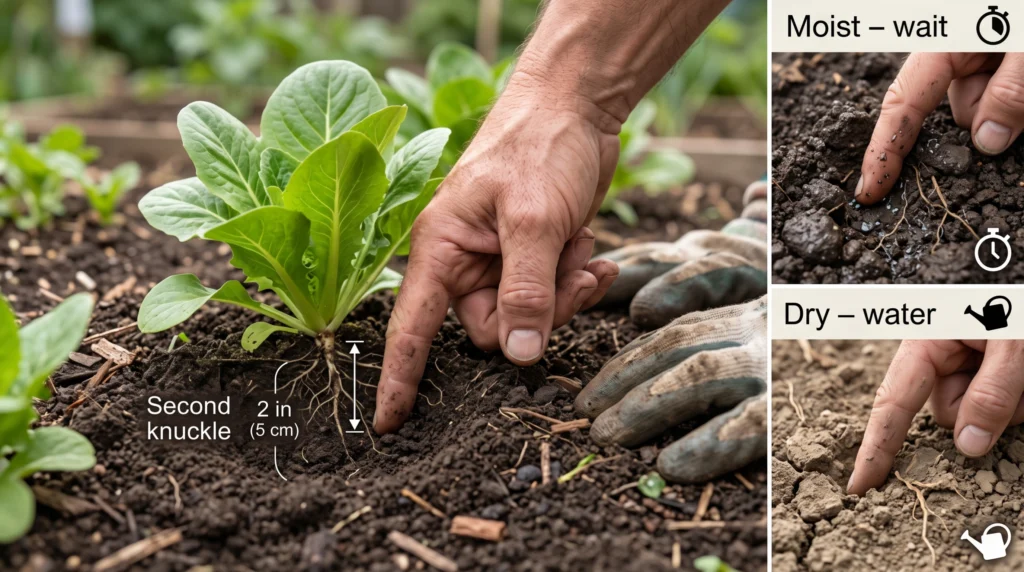
Instead of looking at the calendar, use the finger method. Press the tip of your index finger into the soil around the base of your plants to the level of the second knuckle. When it is dry there, water it. If it is moist, wait for another day and check.
These additional signs will help:
- Soil becomes separated from the walls of the raised bed and containers.
- Slightly pale color of leaves and their drooping in the afternoon hours, while in the evening they return to normal (this is a sign that requires only slight attention, not immediate actions).
- A pot is lighter when lifted.
- Pale and crusty surface of the soil.
Wilting in the afternoon on a hot day is a normal process. Plants with large leaves, like squash, often perform this function as a reaction to heat. What is important is how they behave the next morning. If it is still wilted in the morning, it should be watered.
Water deeply, not often
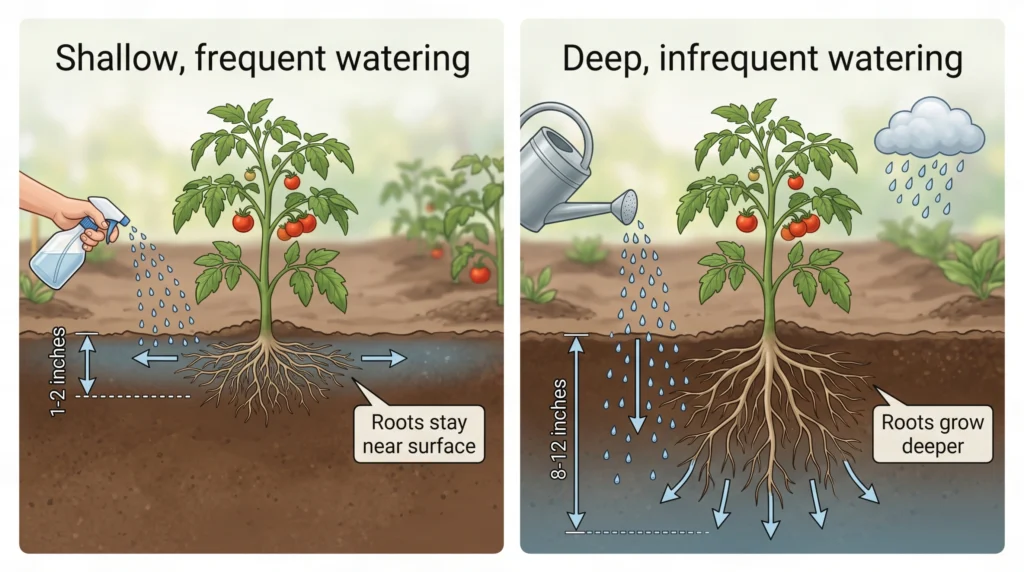
If there is just one thing to take away from this post, it’s this: Deep, infrequent watering creates strong plants; shallow, frequent watering creates weak ones.
If you water lightly every day, the moisture only penetrates an inch or two deep. The roots grow near the soil surface, where it is hottest and driest, and the plant becomes dependent on daily watering by you. Overlook it for a few days, and the plant will pay the price.
If you water heavily and then wait, the water penetrates deeper and the roots follow it. Plants with deep roots can withstand heatwaves, over-watering, or going without your care for a weekend. In my experience, this is the single biggest difference between a garden that struggles through August and one that continues producing.
The test for whether you have watered deeply enough is to dig a hole in the soil an hour after watering and see if it is wet several inches down, or if it is dry below the top inch.
The best time to water
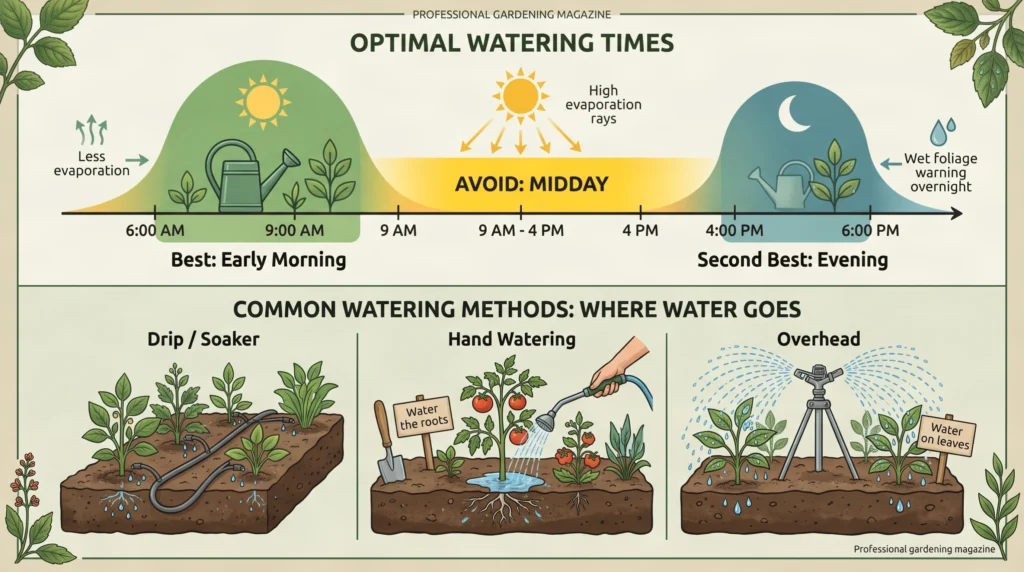
It’s the early morning period. It is cool enough that not too much of the water will evaporate before it gets to the root and the plants are able to start their day hydrated. Also, the foliage dries very fast when the sun rises, helping to prevent plant fungus.
Second best time to water is the evening; however, be cautious. If foliage is wet during the night time, it is very likely to develop mildew and blights, especially tomatoes, squashes and cucumbers.
Time- and water-saving watering techniques
The method of watering is important almost as much as its frequency.
Drip and soaker irrigation are the systems that drip water slowly onto the soil. They are very water saving, keep foliage dry and can be automated. In case you have more than two beds, it would be the first upgrade I would recommend. It is close to a free lunch in gardening.
Hand watering with a wand or can is good for small beds and containers. The water should be dripped at the base of the plant and should soak into the soil, not flow from it.
Overhead irrigation systems are the least efficient one. A lot of water evaporates or falls on the leaves. It may work in emergency cases, however, it should be used in the morning and will require a longer time for a full watering.
Your new best friend : mulch
Mulch of 2-3 inches deep can help reduce the amount of watering you have to do significantly. Not only does it protect the soil from evaporation, but it also helps to prevent the formation of crust on the surface of the soil. Finally, mulch helps fight against weeds that compete with your plants for water.
Remember that you need to leave a few inches between the mulch and the stem of your plants in order to prevent the stems from getting wet and decaying. Don’t mulch your plants as soon as the winter season comes to an end as mulch will make your soil cold, slowing down the development of your plants.
Despite having been against mulching for years, I’ve decided to try mulching on one side of my garden bed. The difference by mid-July was obvious: mulched soil remained moist a day or two longer than non-mulched soil after each watering.
Symptoms of over-watering or under-watering
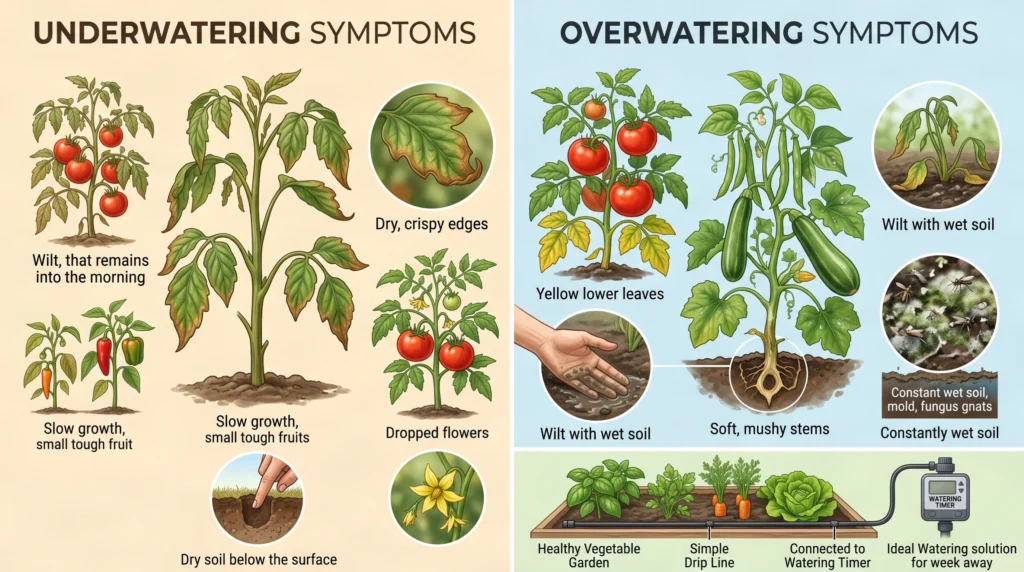
The problem is that it can be difficult to tell them apart since both situations lead to wilting and yellowing of leaves.
Symptoms of under-watering:
- Wilting that does not get better during the night
- Dry, crispy leave’s edges
- Slow growth with small and tough fruits and vegetables
- Flowers falling from fruit-bearing plants
- Dry soil a few inches below the surface
Symptoms of over-watering:
- Yellowing of leaves at the bottom of the plant
- Mushy, soft stems just above the soil level
- Always moist soil, possibly with a smell
- Fungus gnats or mold on top of the soil
- Wilting even when the soil feels wet (the roots are rotting)
As always, test the soil moisture first before watering. Plants wilt in wet soil and need less water, not more.
When you’re away from home
Heading off on a vacation that will last for about a week? Be sure to water thoroughly before you leave and to apply mulch if you have not done so. What you really need here is a basic drip irrigation system hooked up to a timer. Getting it installed ahead of time is far preferable to rushing around the day before departure.
Commonly Asked Questions
Can I water my vegetable garden everyday?
Yes and no. In general, everyday watering is not advised, except when watering recently planted seeds, seedlings and potted plants during extreme weather conditions. However, regular deep watering two or three times per week is better for plants that are established.
How long should I keep watering?
It will depend on the amount of water and soil type. That is why it is very important to do the measuring using some cans or bottles. In many cases, the delivery of one inch requires between 30 and 60 minutes, but you can be different.
Begin with the finger test
It doesn’t require you to have a precise watering strategy. It requires you to make it a routine of checking. Put your finger in the soil, take a good look at your plants, check the weather report, and then water deeply when the first few inches are dry.
Wait for a season, and you’ll begin to get into the rhythm of your garden automatically. Your clay garden will require watering on a different day compared to your sandy garden. And your tomatoes will complain before your carrots do. This is your garden talking. You just need to listen and perhaps keep some tuna cans on hand.